![[oas]](logo2.gif) |
OAS - Osservatorio Astronomico Sormano |
| OAS > Image Gallery |
|
OAS - Osservatorio Astronomico Sormano |
| OAS > Image Gallery |
For technical information about MOID and close approaches with the Earth of asteroids or comets available in this web page , please see our lists:
SAEL Small Asteroids Encounter List ; MBPL Minor Body Priority List ; TECA Table of Next Closest Approaches to the Earth by Asteroids ;
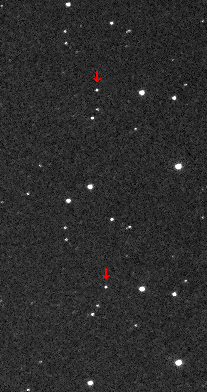
| One of the first images in the world of the famous minor planet 1996 JA1 obtained on May 16, 1996 at Sormano. This NEA (about 220 m in diameter) reached the minimum distance of 453000 km from the Earth on May 19 at 16.34 UT. |
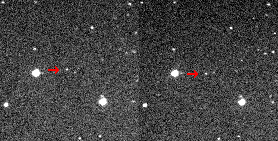
| Precise positions from these CCD frames, obtained at Sormano on Aug. 12, 1997, allowed Gareth Williams at the Minor Planet Center to clarify that this was not an ordinary asteroid but an object orbiting the sun with a period of thousand years. |
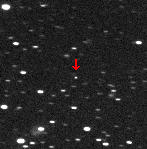
| When NEAs approach our planet they usually cross the sky at a very high speed. This image was taken at Sormano on May 1, 1997 when this minor planet was moving at a speed of 13 deg/day. In this 20 s CCD exposure 1997 GD32 appears as a point-like source because the telescope was tracked on the asteroid motion. At the time of the image this 200 meters asteroid was 6 million kilometers from the Earth. |
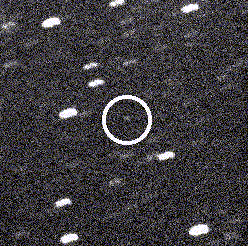
| CCD image of asteroid 2003 QB30, obtained on August 26, 2003 at Sormano Observatory. This small asteroid (having a diameter of approximately 25 mt) reached the minimum distance of 777909 km from the Earth on August 27, 2003. 2003 QB30 has a MOID of 0.0026 AU. |
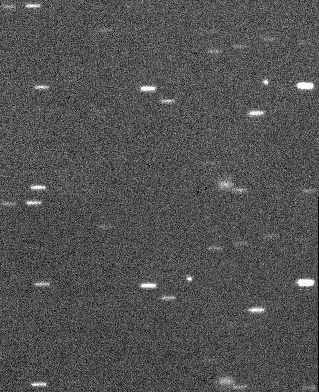
| CCD images of asteroid 2003 SR84, obtained on September 25, 2003 at Sormano Observatory. This object (having a diameter of approximately 40 mt) has a MOID of 0.0027 AU; it reached the minimum distance of 1047185 km from the Earth on September 27, 2003 ( radar observations of this object were obtained at Goldstone ). |
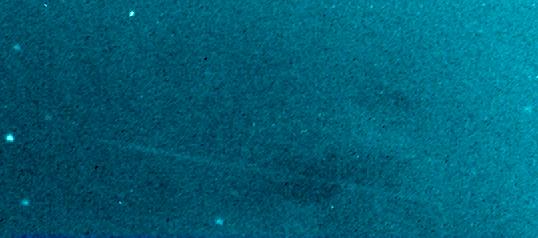
| This 20 sec. exp. CCD image shows the 9.54 arcmin trail of 2004 FH, taken on March 18, 2004 - UTC 21:14:01 at Sormano Observatory. One hour later, this object reached the minimum geocentric distance from the Earth of 0.0003282 AU or 49098 Km. 2004 FH has a diameter of approximately 30 meters with a MOID of 0.0001 AU (see SAEL list ) . At the observation time of this image, the asteroid was only 5 degrees above the southern horizon totally deep in the glare of Milan (about 40 Km south of the observatory). The mirror of the 50 cm telescope was more than half below the dome level. |
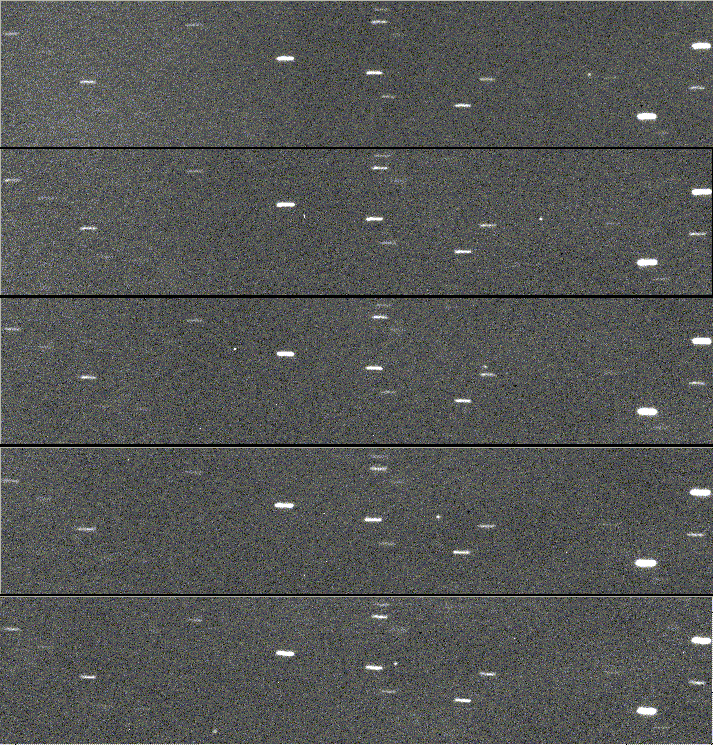
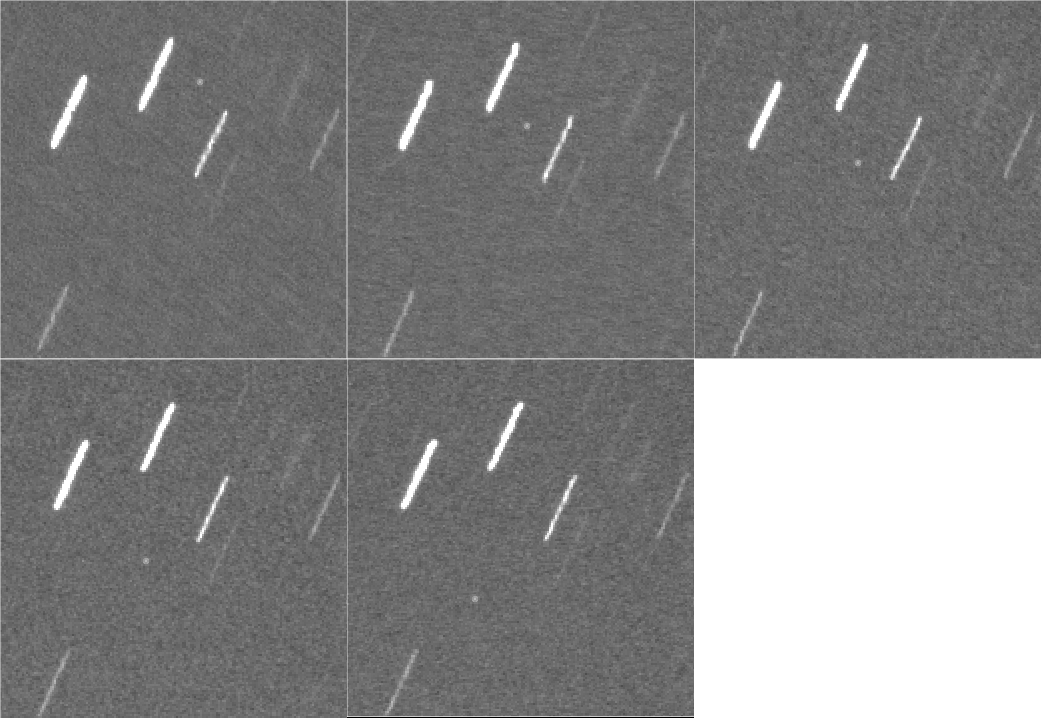
| The animation of n.5 CCD images of 30 sec. exp. , obtained on August 31, 2009 at Sormano Observatory, shows asteroid 2009 QH34 moving at 48.91 arcsec/min. This object (having a diameter of approximately 50 mt) has a MOID of 0.0058 AU; it reached the minimum distance of 1675496 km from the Earth on August 30, 2009. |
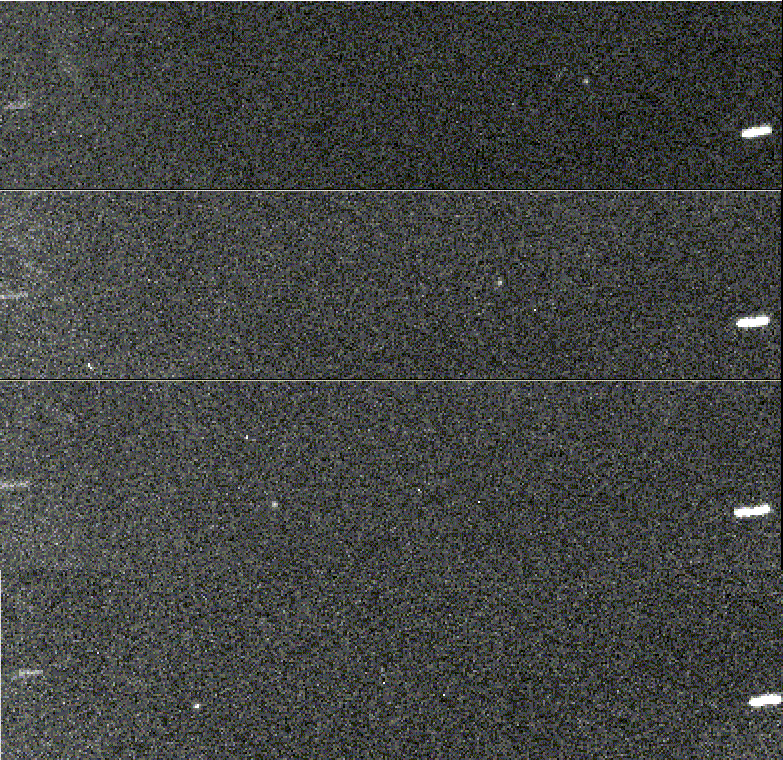
| The animation of n.4 CCD images of 30 sec. exp. , obtained on August 31, 2009 at Sormano Observatory, shows asteroid 2009 QC35 moving at 42,47 arcsec/min. At the time of the observations, the asteroid was only 13 degrees above the southern horizon. This object with a diameter of approximately 40 mt has a MOID of 0.0044 AU; it reached the minimum distance of 1122433 km from the Earth on September 02, 2009. |
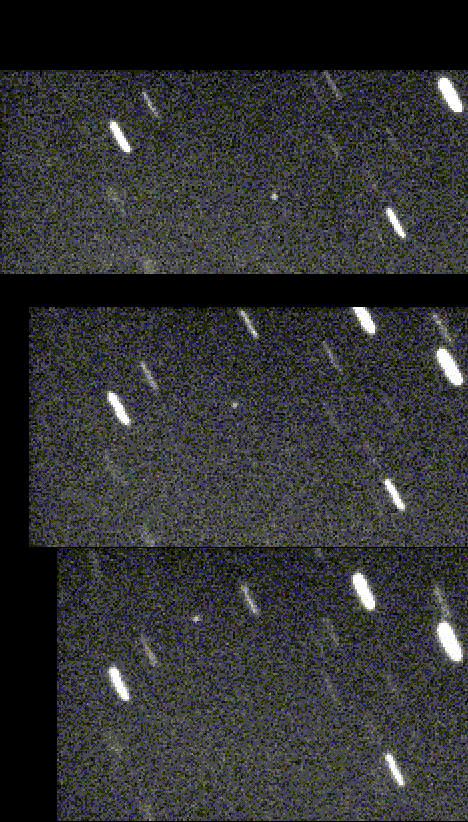
| The animation of n.3 CCD images of 40 sec. exp. , obtained on October 15, 2009 at Sormano Observatory, shows asteroid 2009 TM8 moving at 36,34 arcsec/min. This object with a diameter of approximately 10 mt has a MOID of 0.0011 AU; it reached the minimum distance of 346618 km from the Earth on October 17, 2009. |
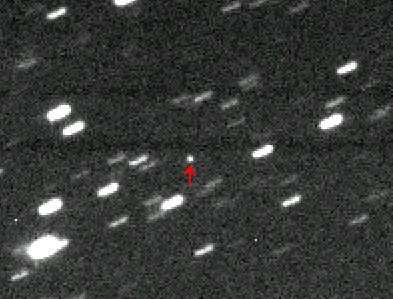
| This CCD image of 20 sec. exp., the last one of eight frames , obtained on January 19, 2010 at Sormano Observatory, shows asteroid 2010 AF40 moving at 42,10 arcsec/min. This object, approximately 40 mt in diameter, has a MOID of 0.0018 AU; it reached the minimum distance of 893248 km from the Earth on January 21, 2010. |
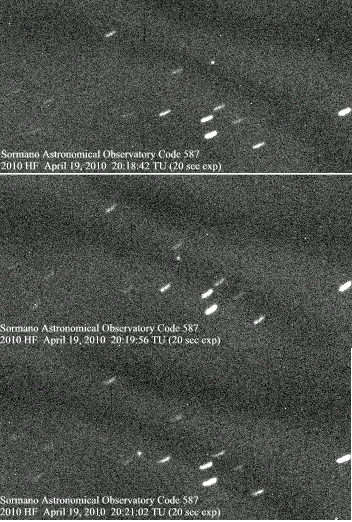
| CCD images of 20 sec. exp. obtained on April 19, 2010 at Sormano Observatory, shows asteroid 2010 HF moving at 51.16 arcsec/min. This small asteroid, approximately 35 mt in diameter, has a MOID of 0.0061 AU and it reached the minimum geocentric distance of 901327 km from the Earth on April 20.9, 2010 (see SAEL list). |
|
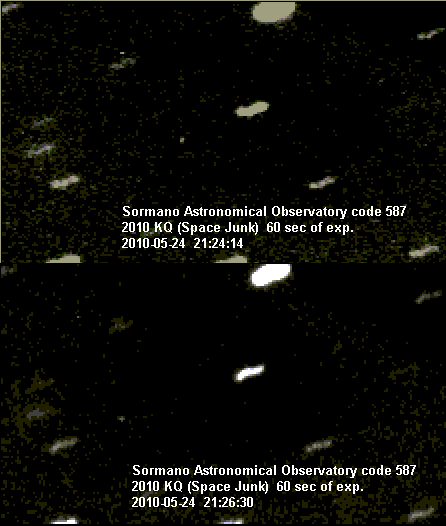
CCD images of 60 sec. exp. obtained on May 24, 2010 at Sormano Observatory,
shows 2010 KQ moving at about 18 arcsec/min.
This small object, approximately 5 mt in diameter, has
a MOID of 0.0065 AU and it reached the minimum geocentric distance of 492027 km from the Earth on May 21, 2010
(see SAEL list).
The orbital elements of this object has suggested that it could be not an asteroid but a Centaur booster may be launched in 1974. Please see a description at JPL-NASA about this possible Space Junk and the Minor Planet Center - Editorial Notice |
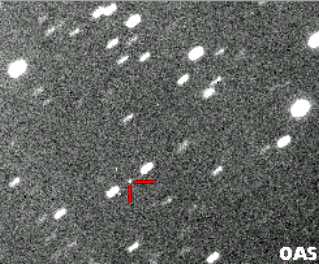
| CCD image obtained on May 24, 2010 at Sormano Observatory, shows asteroid 2010 KV39 moving at 10.63 arcsec/min. This small asteroid, approximately 20 mt in diameter, has a MOID of 0.0009 AU and it reached the minimum geocentric distance of 249978 km from the Earth on May 26.9, 2010 (see SAEL list). |
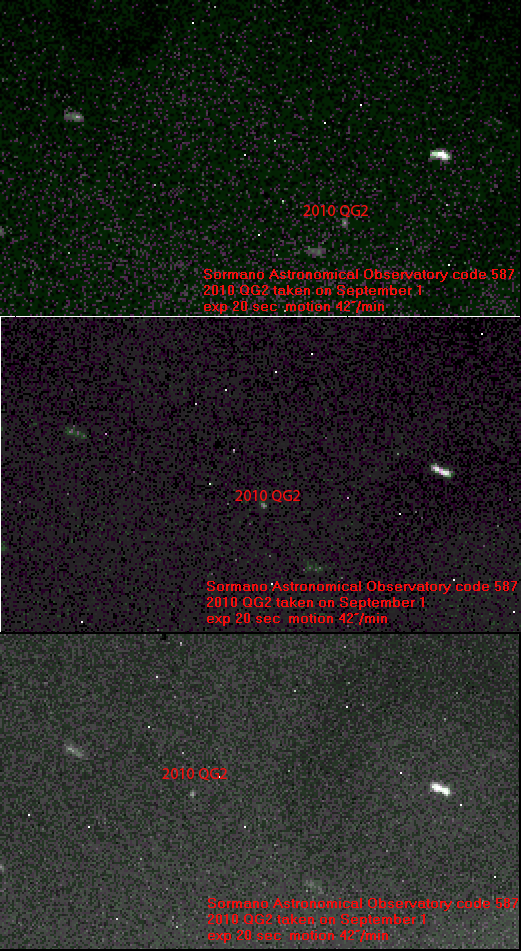
| Animation of CCD images obtained on Sept. 01, 2010 at Sormano Observatory, shows asteroid 2010 QG2 moving at about 42 arcsec/min. This small asteroid, approximately 60 mt in diameter, has a MOID of 0.0015 AU and it reached the minimum geocentric distance of 1735335 km from the Earth on Sept. 03.59, 2010 (see SAEL list). |
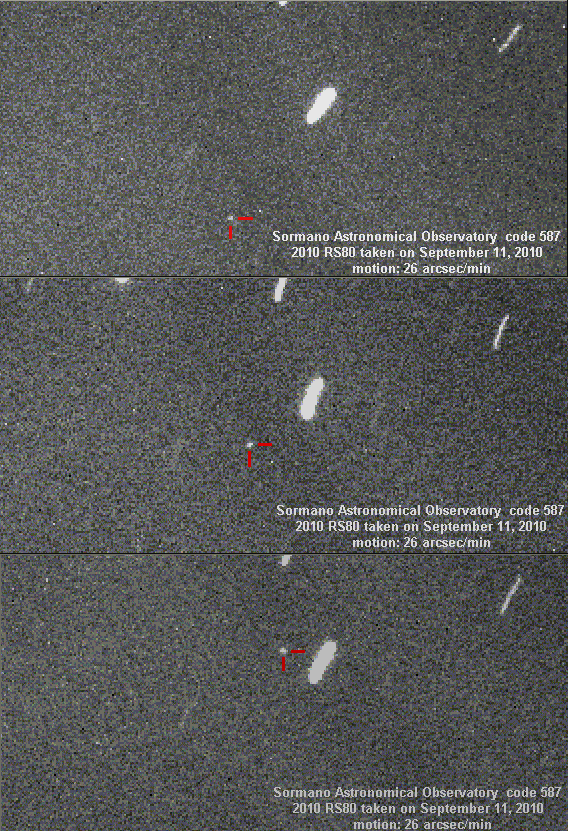
| Animation of CCD images obtained on Sept. 11, 2010 at Sormano Observatory, shows asteroid 2010 RS80 moving at about 26 arcsec/min. This small asteroid, approximately 30 mt in diameter, has a MOID of 0.0056 AU and it reached the minimum geocentric distance of 842236 km from the Earth on Sept. 09.69, 2010 (see SAEL list). |
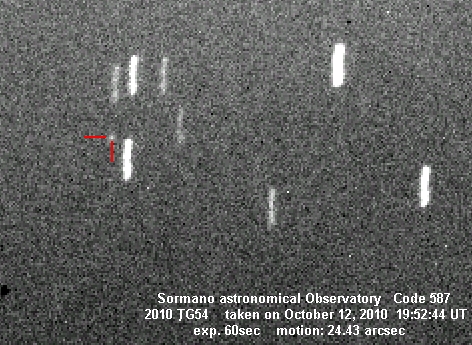
| CCD image obtained on October 12, 2010 at Sormano Observatory, shows asteroid 2010 TG54 moving at about 24.5 arcsec/min. This small asteroid, approximately 25 mt in diameter, has a MOID of 0.0108 AU and it reached the minimum geocentric distance of 1675496 km from the Earth on October 15, 2010 (see SAEL list). |
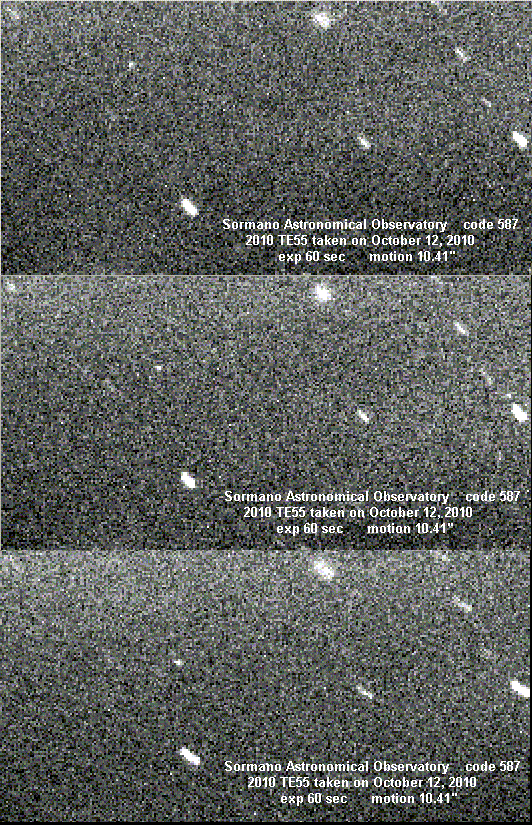
| Animation of CCD images obtained on October 12, 2010 at Sormano Observatory, shows asteroid 2010 TE55 moving at about 10.5 arcsec/min. This small asteroid, approximately 15 mt in diameter, has a MOID of 0.0020 AU and it reached the minimum geocentric distance of 365617 km from the Earth on Oct. 17, 2010 (see SAEL list and TECA list). |
|
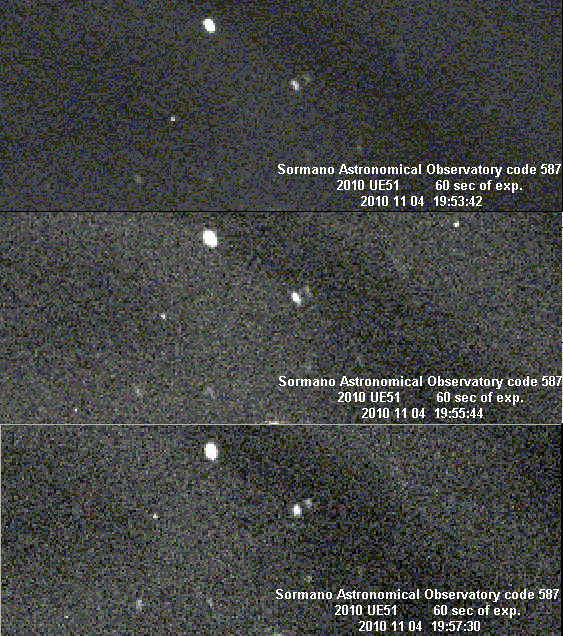
Animation of CCD images obtained on November 04, 2010 at Sormano Observatory,
shows 2010 UE51 of 19 in magnitude. This small object, approximately 13 mt in diameter, has
a MOID of 0.0075 AU and it will reach the minimum geocentric distance of 1037311 km from the
Earth on Nov. 14, 2010 (see SAEL list
and TECA list).
It has been suggested that this small object could be a space junk as a rocket booster. |
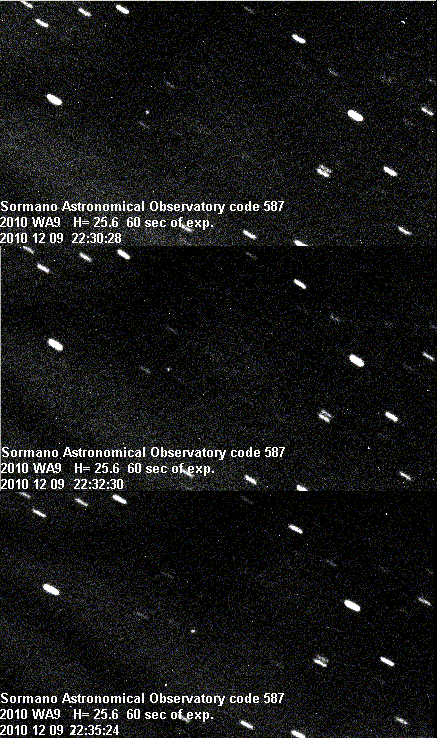
| Animation of CCD images obtained on December 9, 2010 at Sormano Observatory, shows 2010 WA9 of about 18.5 in magnitude when its motion was about 16.14 arcsec/min. This small object, approximately 50 mt in diameter, has a MOID of 0.0031 AU . It reached the minimum geocentric distance of 1102386 km from the Earth on Dec. 13, 2010 (see SAEL list). |
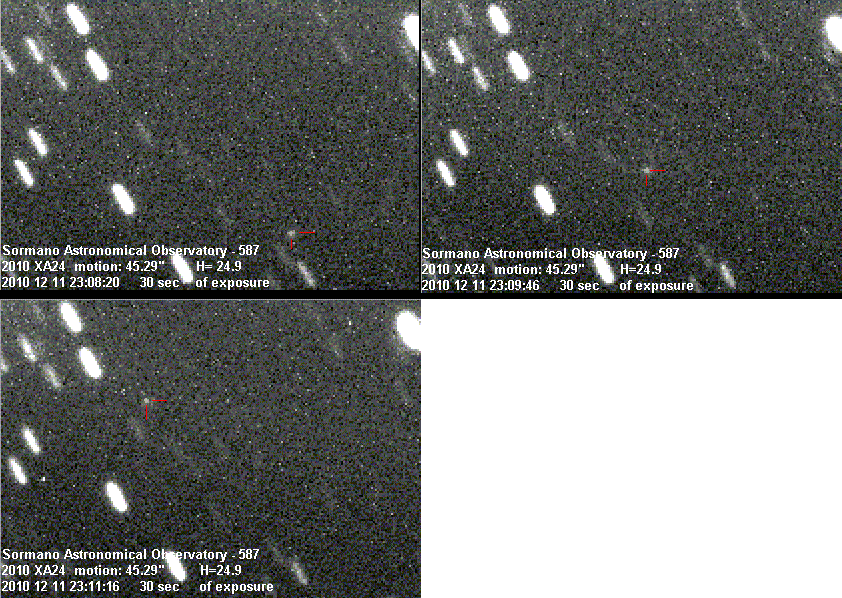
| Animation of CCD images obtained on December 11, 2010 at Sormano Observatory, shows 2010 XA24 of about 18 in magnitude when its motion was 45.29 arcsec/min. This small object, approximately 60 mt in diameter, has a MOID of 0.0121 AU (see SAEL list |
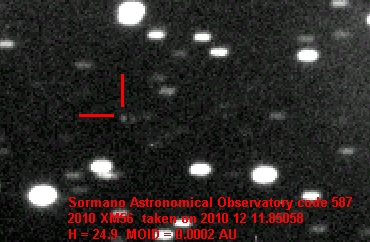
| CCD image obtained on December 11, 2010 at Sormano Observatory, shows 2010 XM56 of about 19 in magnitude. This small object, approximately 50 mt in diameter, has a MOID of 0.0002 AU and it reached the minimum geocentric distance of 666758 km from the Earth on Dec. 17, 2010 (see SAEL list and TECA list). |
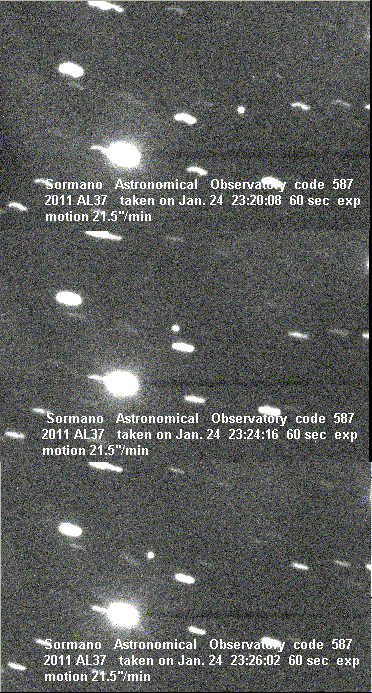
| Animation of CCD images obtained on January 24, 2011 at Sormano Observatory, shows 2011 AL37 of about 16 in magnitude. This small object, approximately 80 mt in diameter, has a MOID of 0.0027 AU and it reached the minimum geocentric distance of 855400 km from the Earth on Jan. 26, 2011 (see SAEL list). |
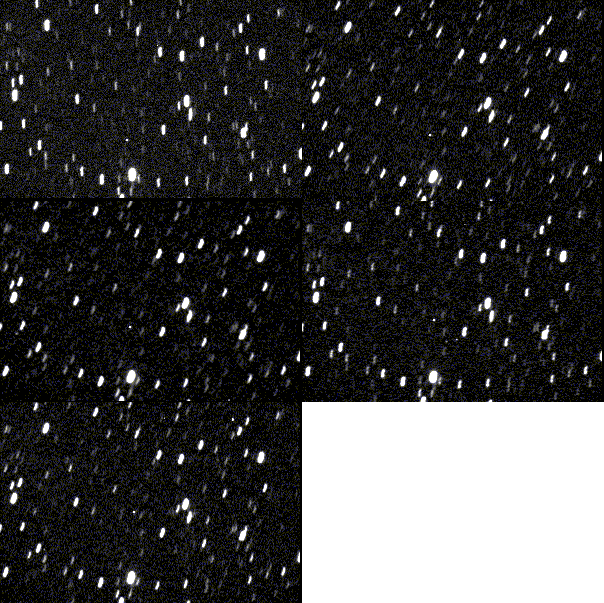
| Animation of CCD images obtained on July 14, 2015 at Sormano Observatory, shows 2011 YC29 of about 16 in magnitude. This Near Earth Object (Amor family) has been reobserved at the second opposition during the nights July 14 and 15, 2015 in a dedicated recovery session. |
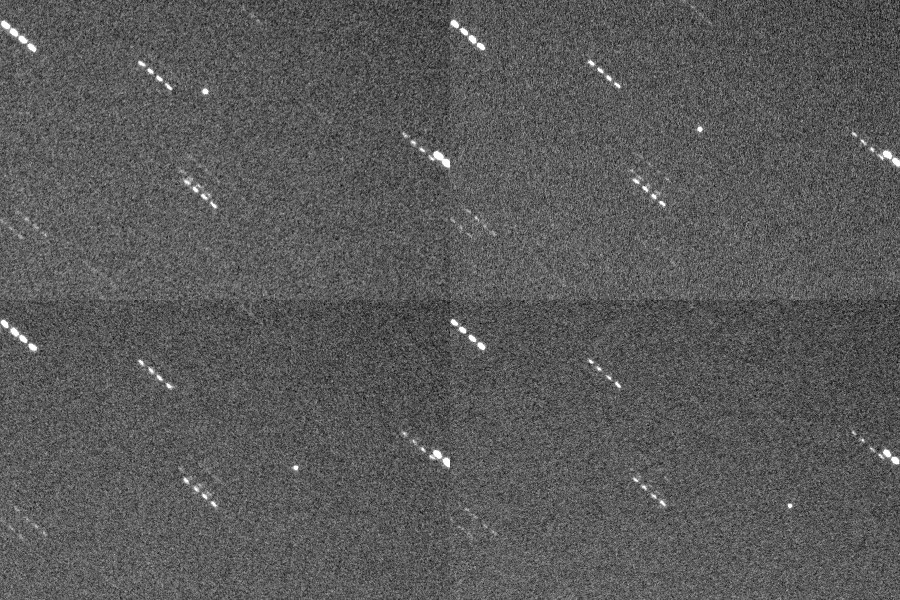
| Animation of n. 4 CCD images (n. 4 images of 5 sec of exp for any frame) obtained on October 11.857, 2017 at Sormano Observatory, shows 2012 TC4 of about 14.4 in magnitude, the day before its close encounter with the Earth when the apparent motion was 108.76 "/min. This Near Earth Object have had a close approach with our planet at 50152 km (geocentric distance). This small object was signed as Virtual Impactor due to the very minimum distance computed before the recovery and about this a dedicated recovery session was performed at Cerro Paranal. |
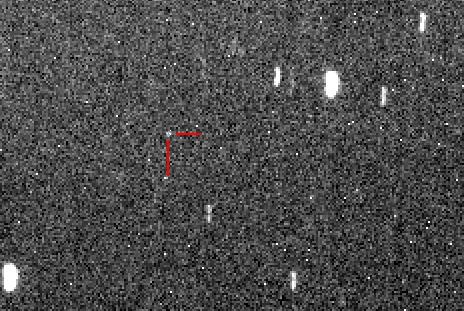
| CCD image obtained on September 13, 2013 at Sormano Observatory, shows 2013 RM73 of about 18.5 in magnitude. This small object, approximately 25 mt in diameter, has a MOID of 0.0054 AU and it reached the minimum geocentric distance of 874698 km from the Earth on Sept. 17, 2013 (see SAEL list). |
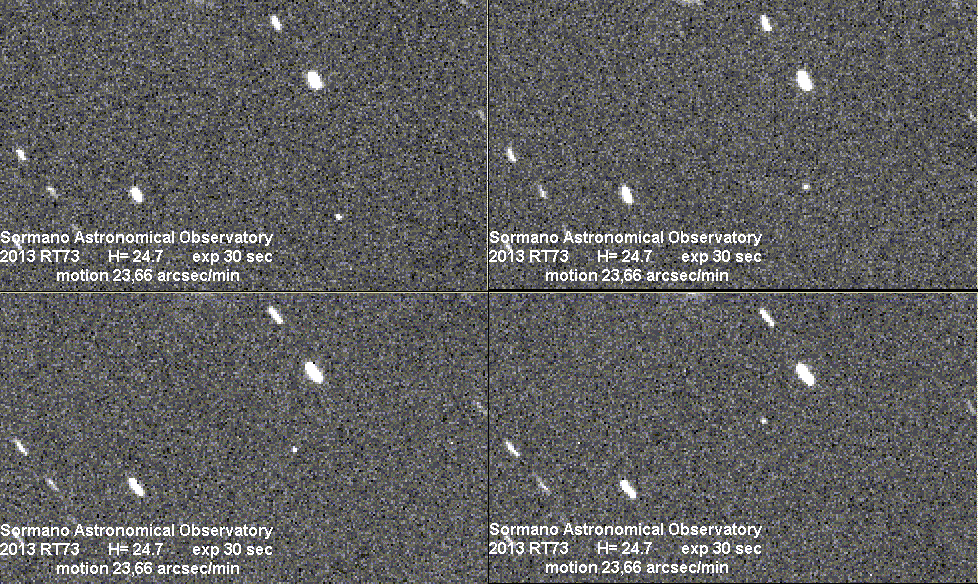
| Animation of CCD images obtained on September 13, 2013 at Sormano Observatory, shows 2013 RT73 of about 16,5 in magnitude. This small object, approximately 60 mt in diameter, has a MOID of 0.0182 AU. Images obtained at 30 sec of exposure when its motion was about 23.66 arcsec/min. |
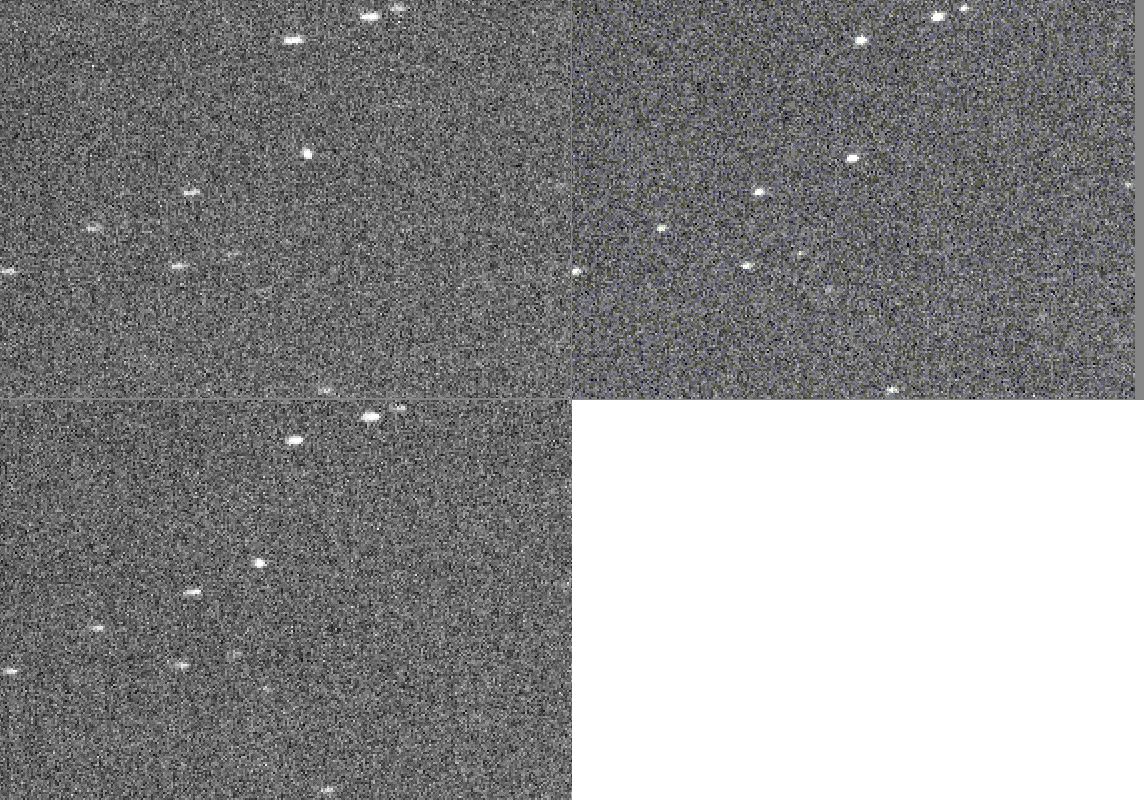
| Animation of CCD images obtained on March 06, 2014 at Sormano Observatory, shows 2014 CU13 of about 16 in magnitude. This object, classified as PHA (Potential Hazardous Asteroid), has a MOID of 0.0081 AU. Images obtained at 60 sec of exposure when its motion was about 11,29 arcsec/min. (see our MBPL page) |
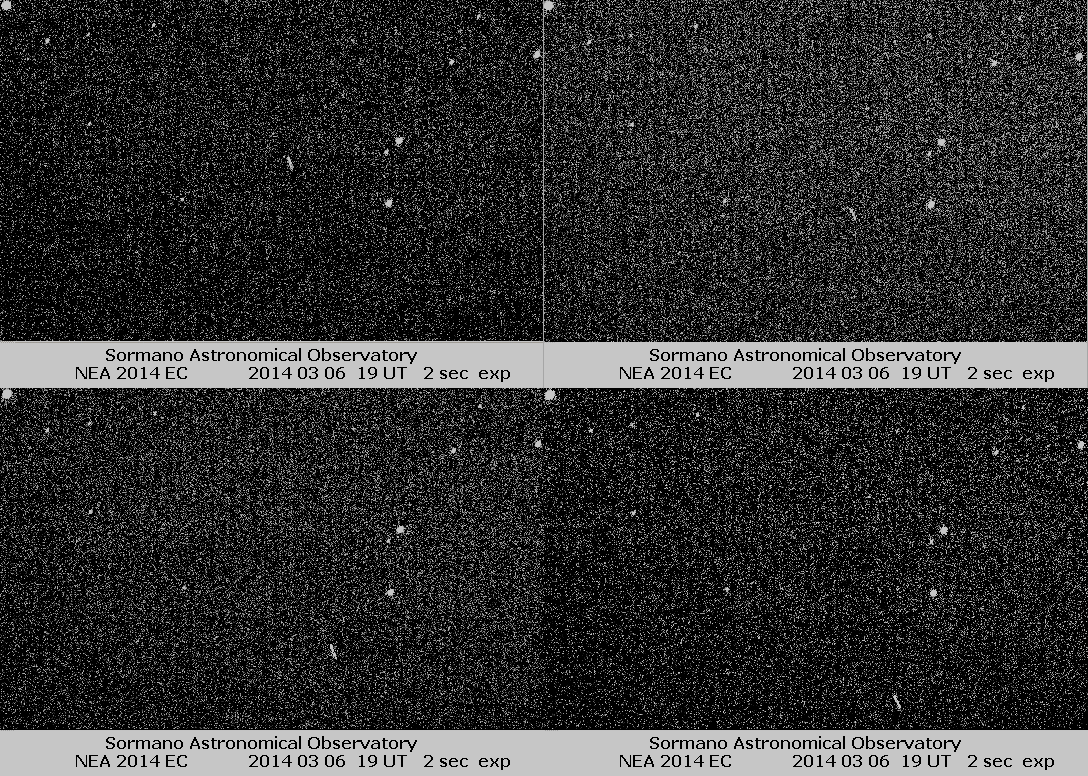
| Animation of CCD images obtained on March 06, 2014 at Sormano Observatory, shows 2014 EC of about 14.1 in magnitude. This small object, approximately 14 mt in diameter, has a MOID of 0.0004 AU. Images of 2 sec of exposure obtained at very low altitude in reference to Sormano'latitude, 5 degree above the horizon and close to the time of its close encounter with the Earth at about 61500 Km when its motion was about 677 arcsec/min. (see our SAEL page and our TECA page) |
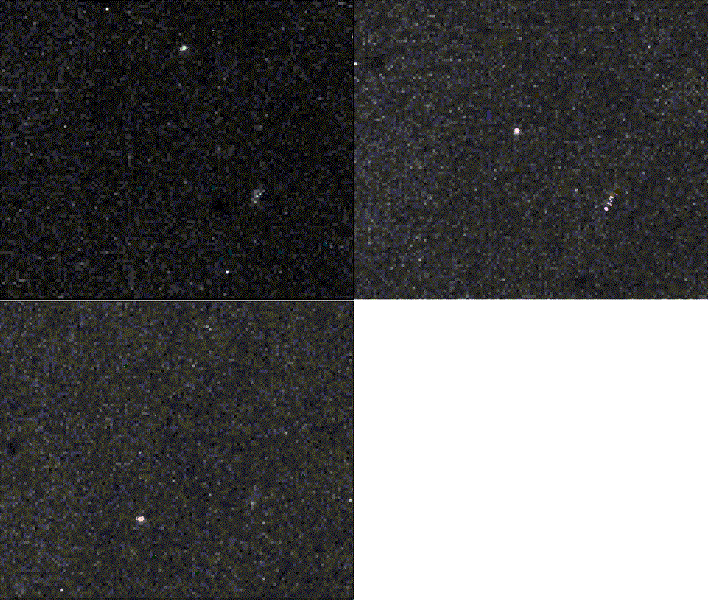
| Animation of CCD images obtained on September 06, 2014 at Sormano Observatory, shows 2014 RC of about 16.0 in magnitude. This small object, approximately 20 mt in diameter, has a MOID of 0.0002 AU. Images of 60 sec of exposure obtained at low altitude in reference to Sormano'latitude. This object reached the geocentric minimum distance of about 39900 Km from the Earth on September 7, 2014. (see our SAEL page and our TECA page) |
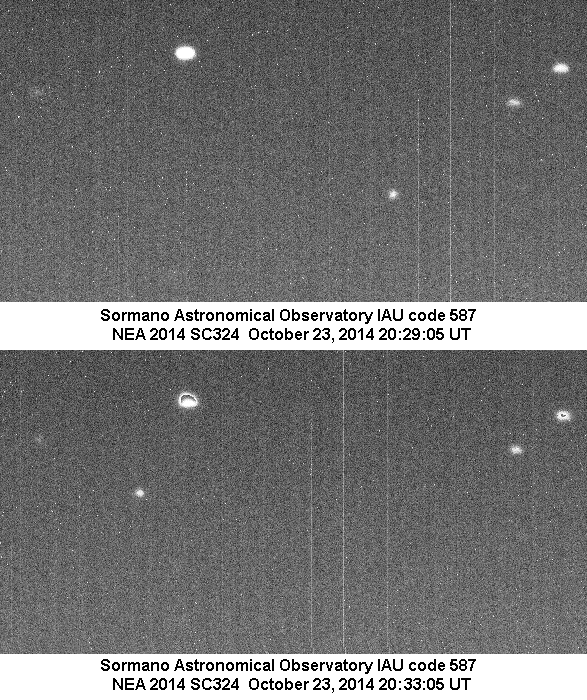
| Animation of CCD images obtained on October 23, 2014 at Sormano Observatory, shows 2014 SC324 of about 13.5 in magnitude. This small object, approximately 60 mt in diameter, has a MOID of 0.0008 AU. Images of 10 sec of exposure. This object reached the geocentric minimum distance of about 565330 Km from the Earth on October 24, 2014. (see our SAEL page). |
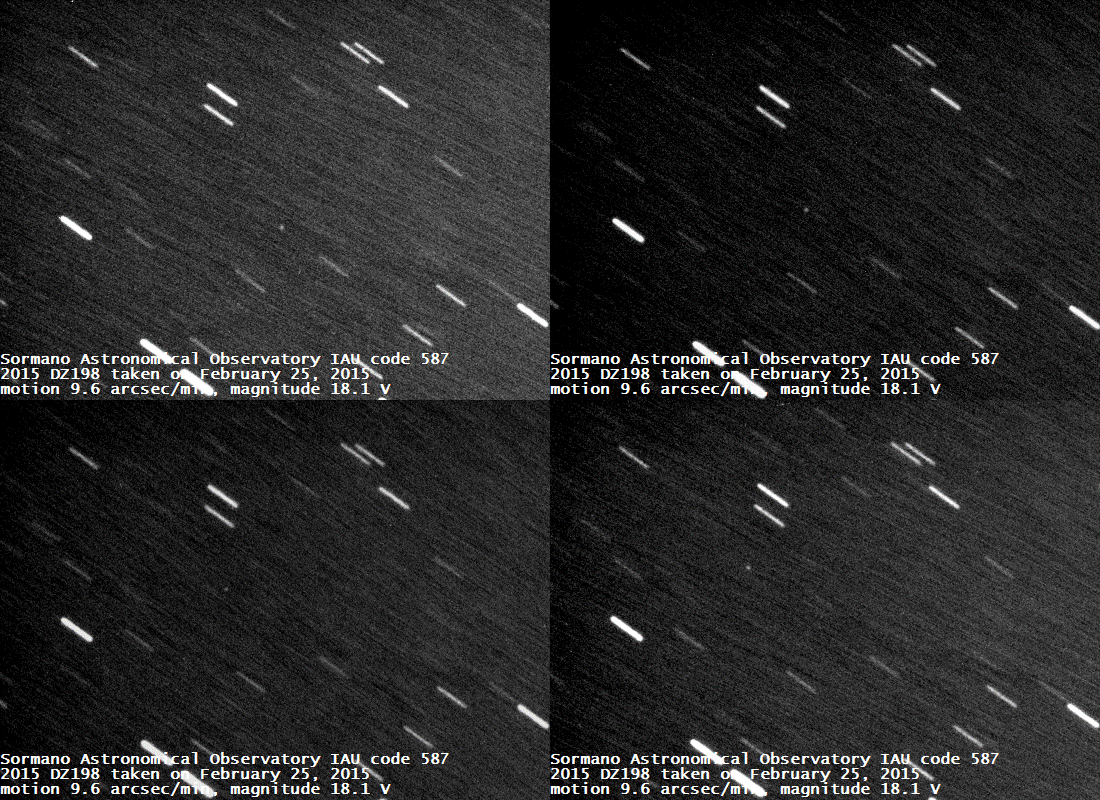
| Animation of CCD images obtained on February 25, 2015 at Sormano Observatory, shows 2015 DZ198 of about 18.1 in magnitude. This small object, approximately 60 mt in diameter, has a MOID of 0.0116 AU and added to our SAEL page. This object was recovered with a great error on its nominal position having a short arc and due to its motion of about 9.6 arcsec/min (see MPEC 2015-D93 |
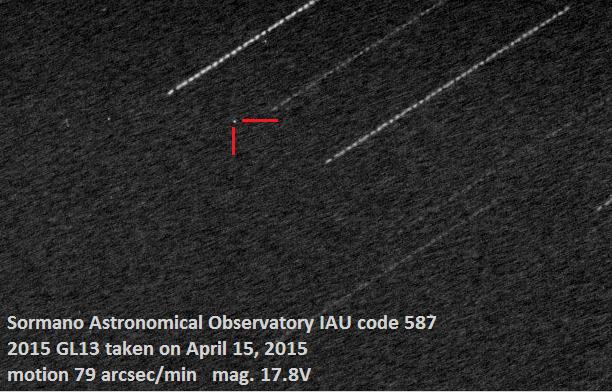
| CCD image obtained on April 15, 2015 at Sormano Observatory, shows 2015 GL13 of about 17.8 in magnitude. This very small object, approximately 9 mt in diameter, has a MOID of 0.0001 AU and added to our SAEL page. At the time of the observations the apparent motion of 2015 GL13 was about 79 arcsec/min |
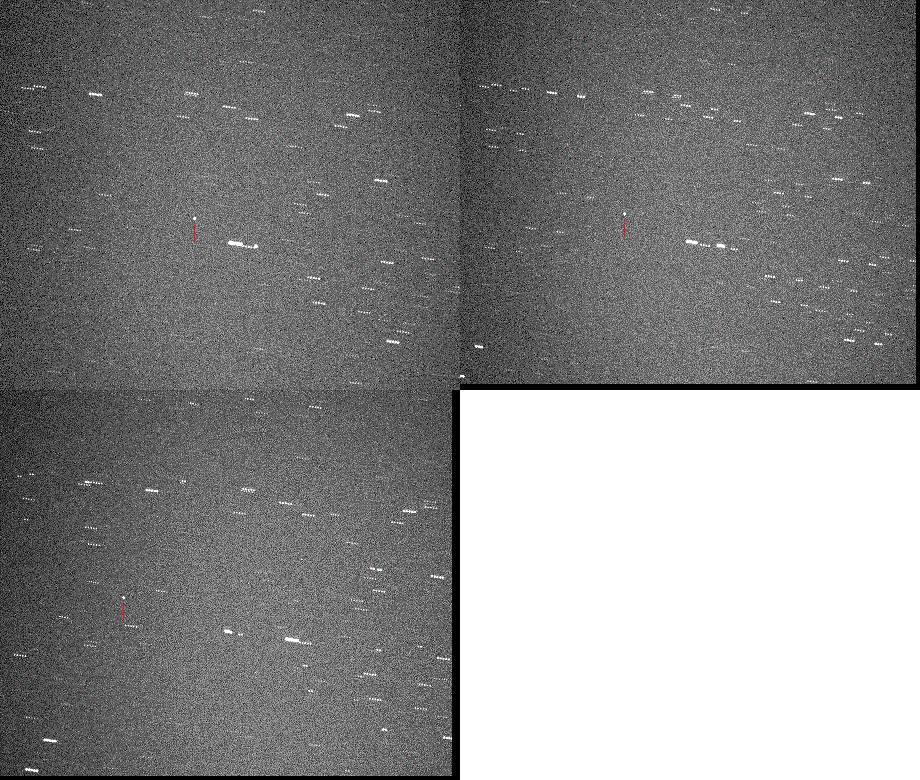
| Animation of CCD images obtained on May 29.05, 2015 at Sormano Observatory, shows 2015 KW120 of about 15.5 V in magnitude. This small object, approximately 30 mt in diameter, has a MOID of 0.0006 AU and added to our SAEL page. This object reached the geocentric minimum distance of about 411000 Km from the Earth on May 29.4, 2015. At the time of the observations, a few hours before the minimum distance, the apparent motion of 2015 KW120 was about 154 arcsec/min. |
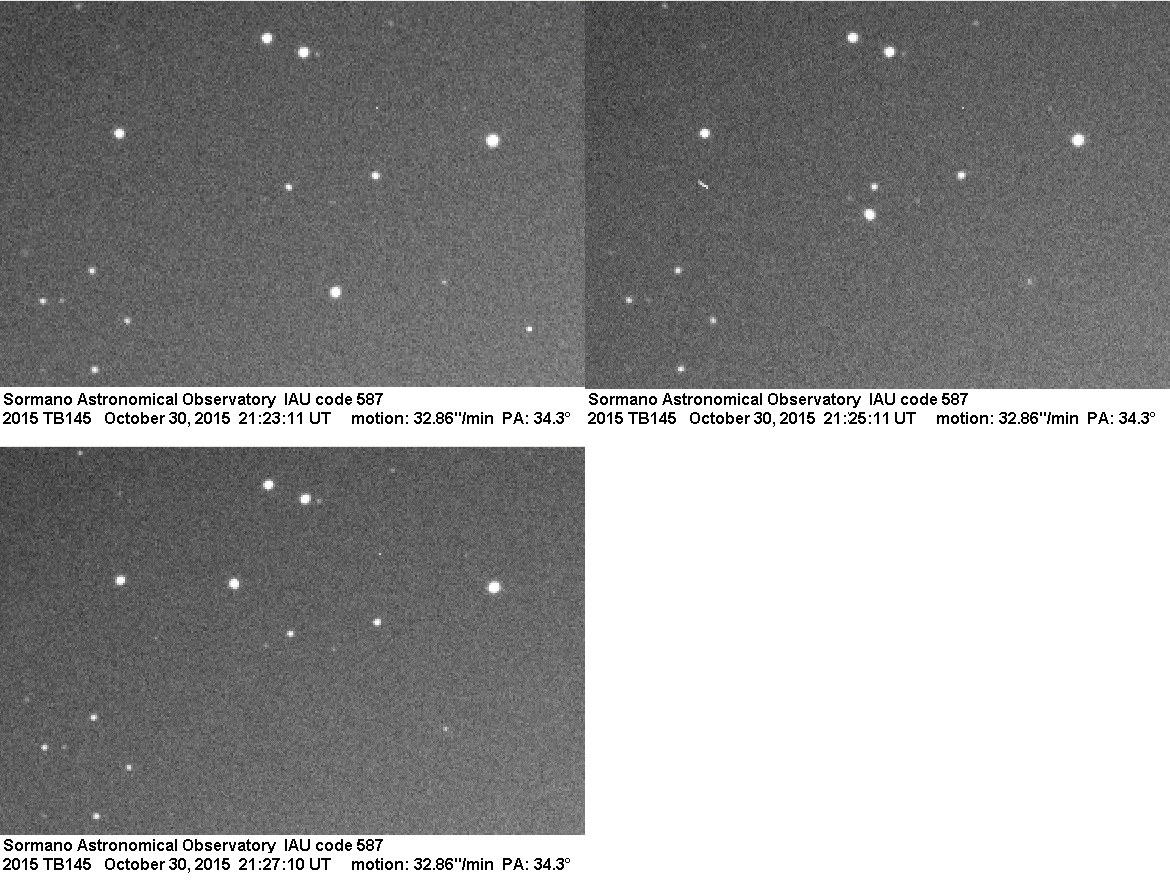
| Animation of CCD images obtained on October 30, 2015 at Sormano Observatory, shows 2015 TB145 of about 12.4 V in magnitude. This object, classified as PHA (Potential Hazardous Asteroid), has a MOID of 0.0018 AU. Images obtained at 5 sec of exposure when its motion was about 32.8 arcsec/min. (see our MBPL page) 2015 TB145 reached the geocentric minimum distance of about 486000 Km from the Earth on October 31.7, 2015 and a distance of 286000 Km from the Moon on on October 31.6, 2015. |
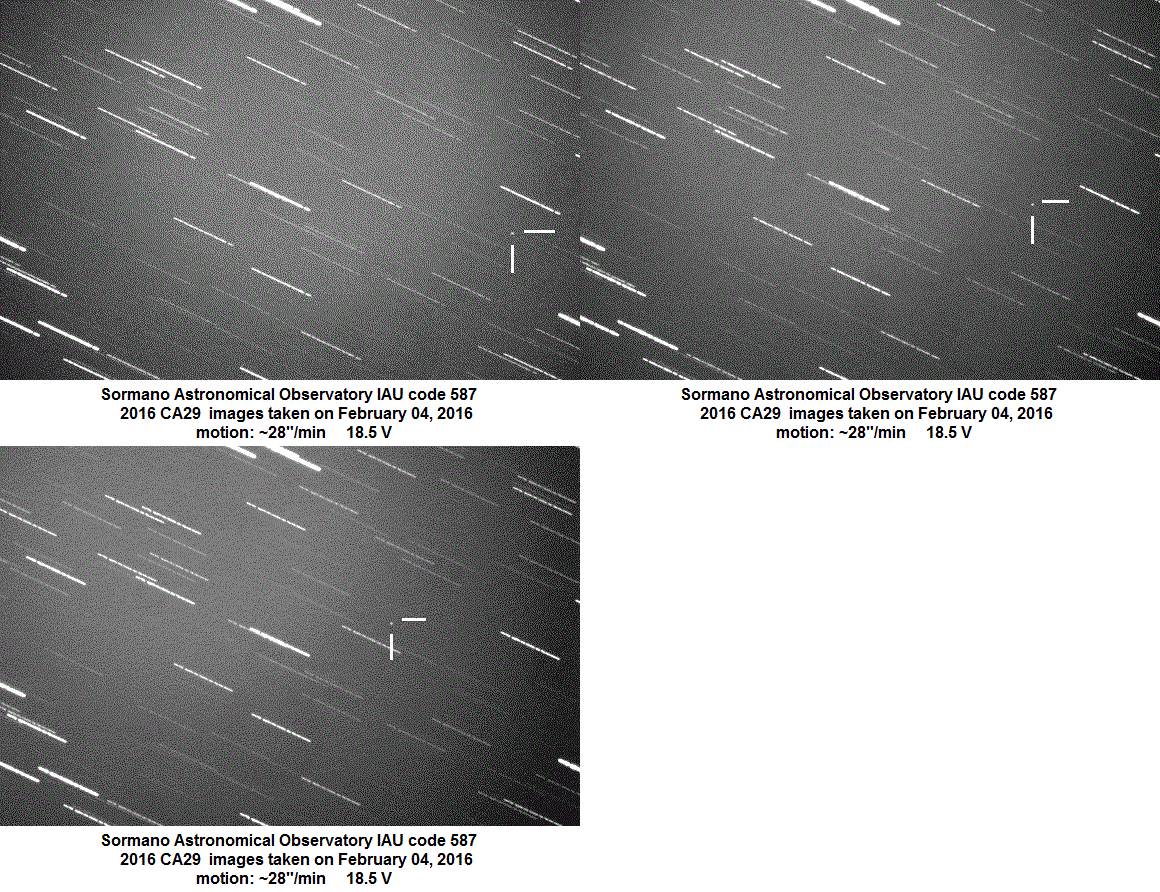
| Animation of CCD images obtained on February 04, 2016 at Sormano Observatory when the object was in the NEOCP (Neo Confirmation Page) shows 2016 CA29 of about 18.5 V in magnitude. This object has a MOID of 0.0044 AU. Images obtained when its motion was about 28 arcsec/min. (see our SAEL page) 2016 CA29 reached the geocentric minimum distance of about 915000 Km from the Earth on February 07.2, 2016 |
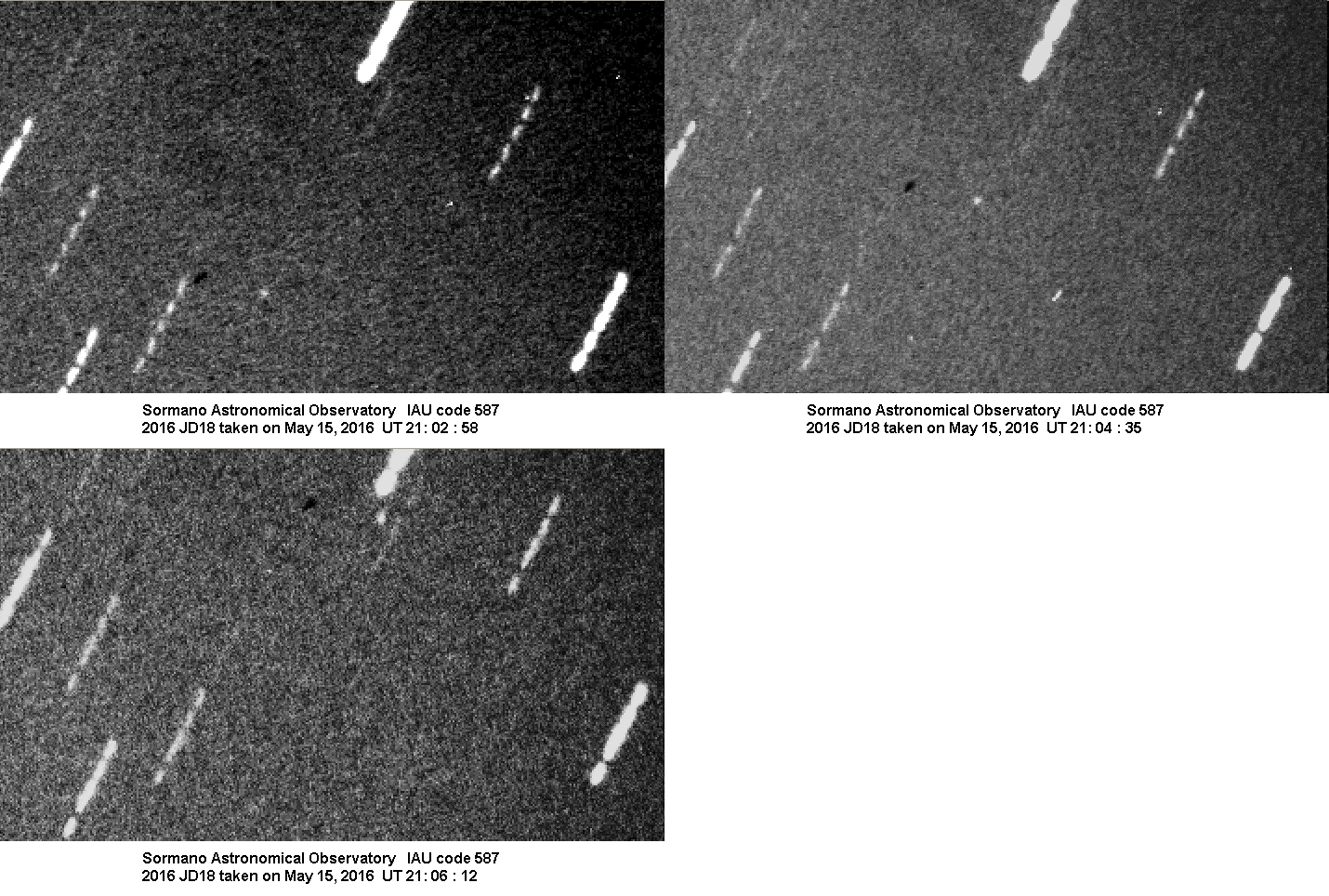
| Animation of CCD images obtained on May 15, 2016 at Sormano Observatory shows 2016 JD18 of about 16.7 V in magnitude. This small object has a MOID of 0.0032 AU. Images obtained when its motion was about 49.8 arcsec/min. (see our SAEL page) 2016 JD18 reached the geocentric minimum distance of about 625169 Km from the Earth on May 16, 2016. |
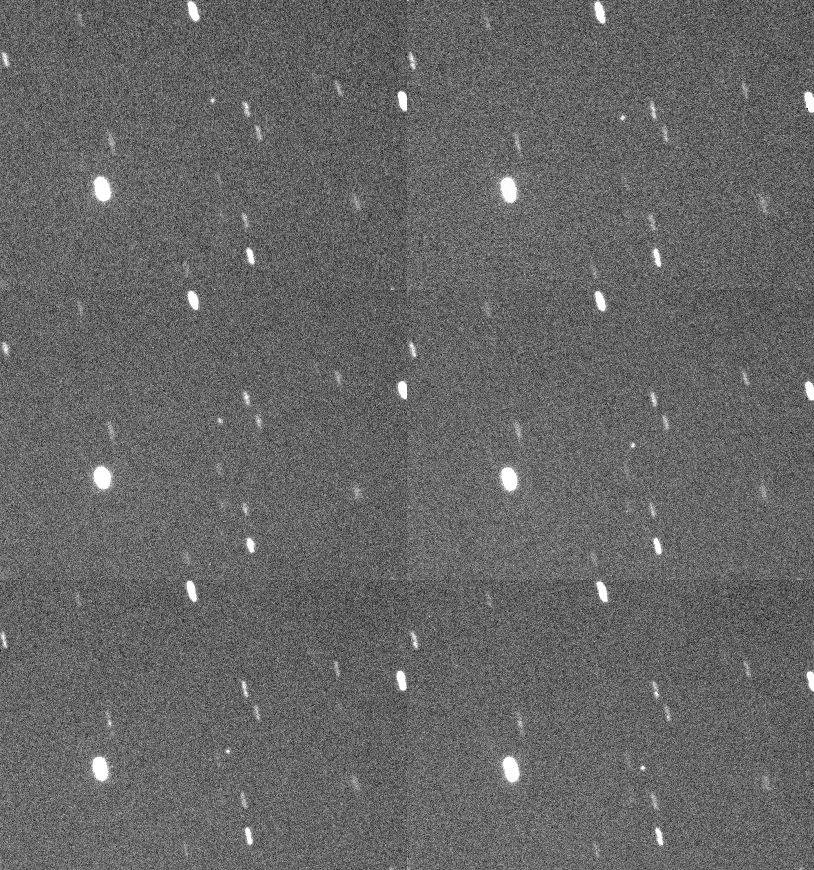
| Animation of CCD images obtained on September 06, 2016 at Sormano Observatory shows 2016 RB1 of about 16.8 V in magnitude. This small object, 10 meter in diameter, has a MOID of 0.0003 AU. Images obtained when its motion was about 16.0 arcsec/min. (see our TECA page and our SAEL page) 2016 RB1 reached the geocentric minimum distance of about 40472 Km from the Earth on September 07.72, 2016. |
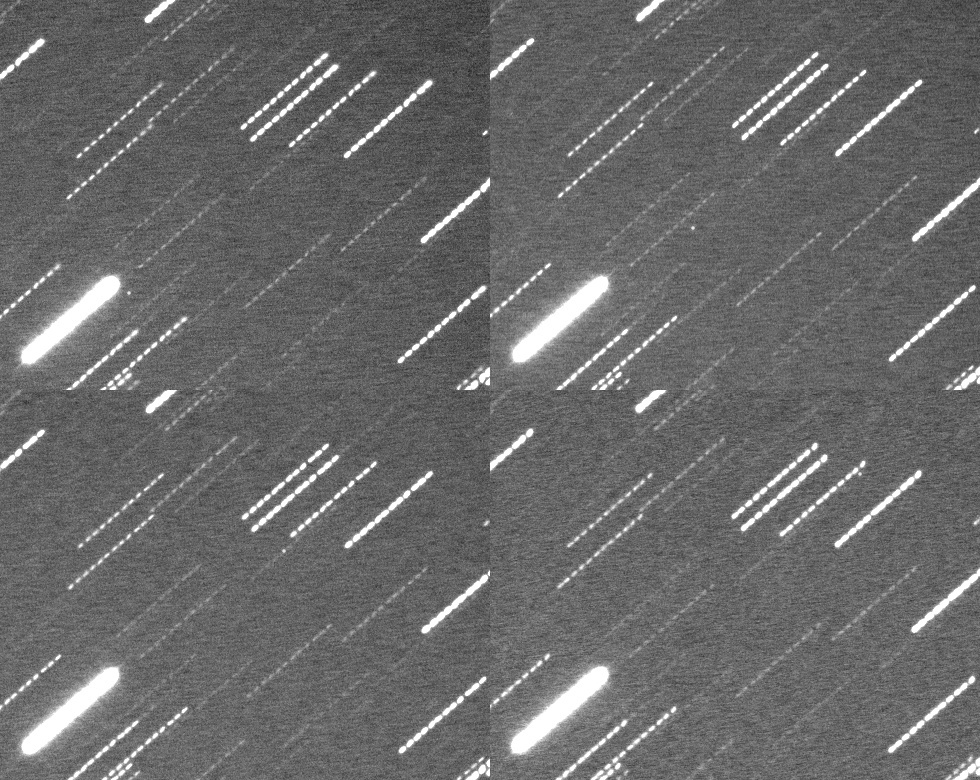
| Animation of CCD images obtained on December 11, 2016 at Sormano Observatory shows 2016 XW20 of about 18.7 V in magnitude. This small object, 25 meter in diameter, has a MOID of 0.0043 AU. Images obtained when its motion was about 57.5 arcsec/min , PA= 310*. (see our TECA page and our SAEL page) 2016 XW20 reached the geocentric minimum distance of about 688250 Km from the Earth on December 13.01, 2016. |
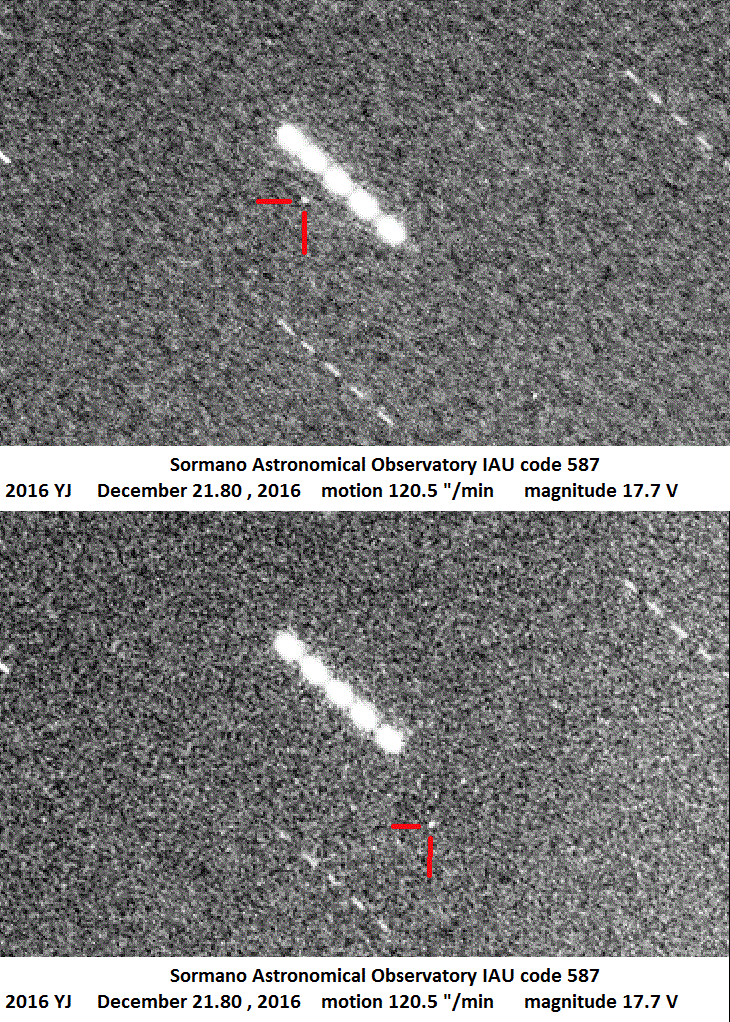
| Animation of CCD images obtained on December 21, 2016 at Sormano Observatory shows 2016 YJ of about 17.7 V in magnitude. This small object, about 20 meter in diameter, has a MOID of 0.0010 AU. Images obtained when 2016 YJ was at low elevation respect our location and its motion was about 120.5 arcsec/min , PA= 227*. (see our TECA page and our SAEL page) 2016 YJ reached the geocentric minimum distance of about 468000 Km from the Earth on December 22.43, 2016. |
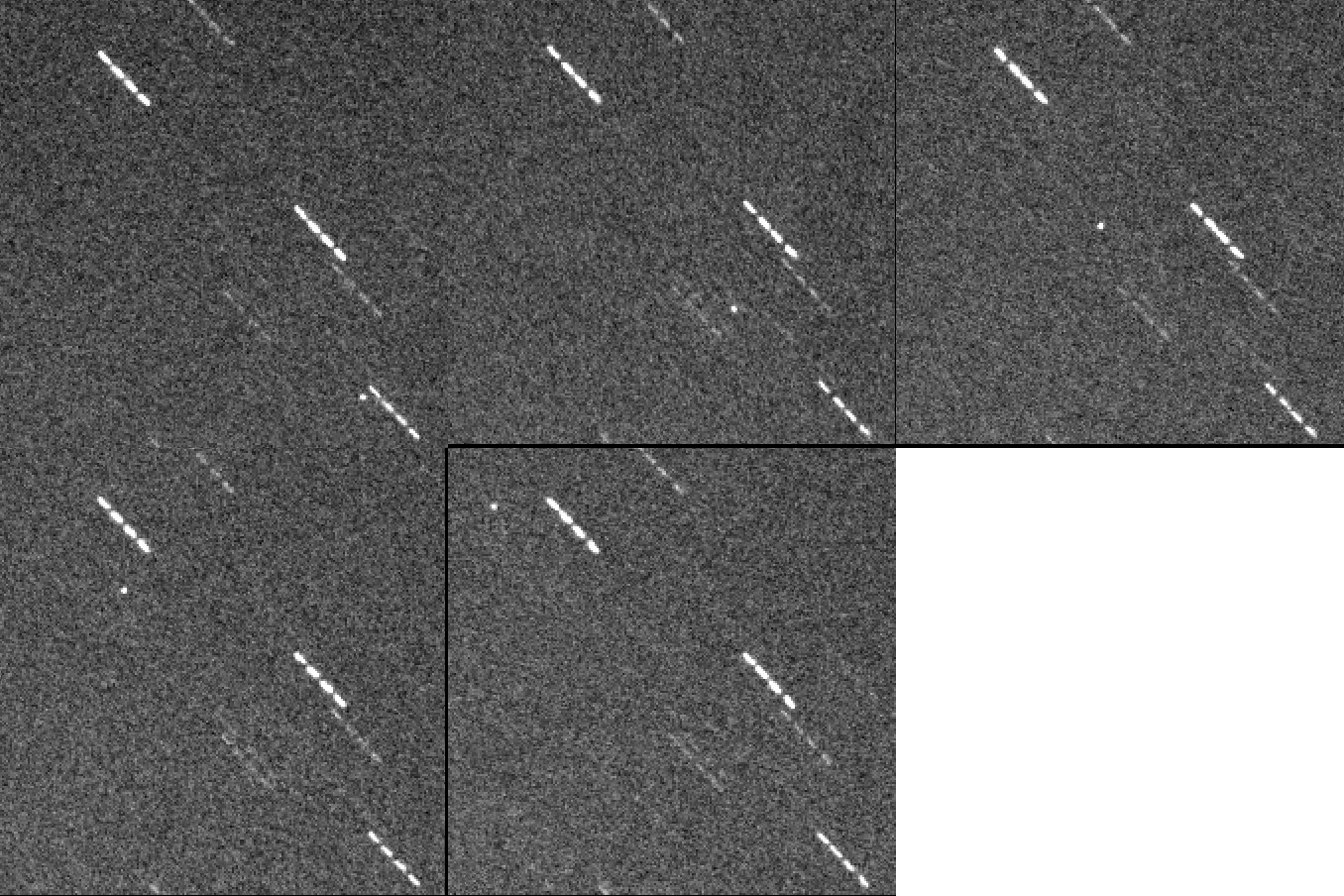
| Animation of CCD images taken on June 18, 2017 at Sormano Observatory to confirm the object after its discovery and reported on NEO Confirmation Page of Minor Planet Center, shows 2017 MF of about 16.2 V in magnitude. This small object, 25 meter in diameter, has a MOID of 0.0026 AU. Images obtained when its motion was about 57.7"/min and PA 45.1* 2017 MF reached the geocentric minimum distance of about 391399 Km from the Earth on June 19.94, 2017. |
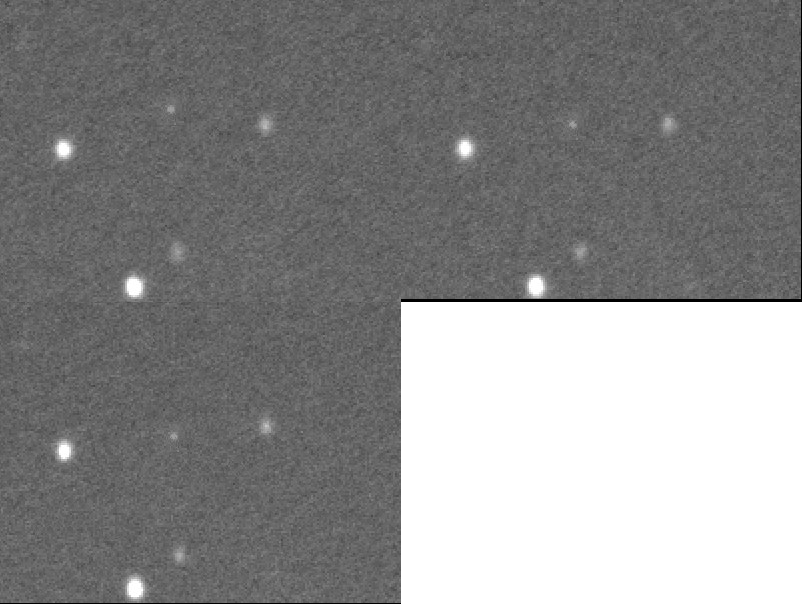
| Animation of CCD images taken on Nov. 27, 2018 at Sormano Observatory to confirm the object after its discovery and reported on NEO Confirmation Page of Minor Planet Center, shows 2018 WE1 of about 17.9 V in magnitude. This small object, 30 meter in diameter, has a MOID of 0.0008 AU. 2018 WE1 reached the geocentric minimum distance of about 107013 Km from the Earth on Nov. 25.00, 2018 (see APEC List for more info) . |
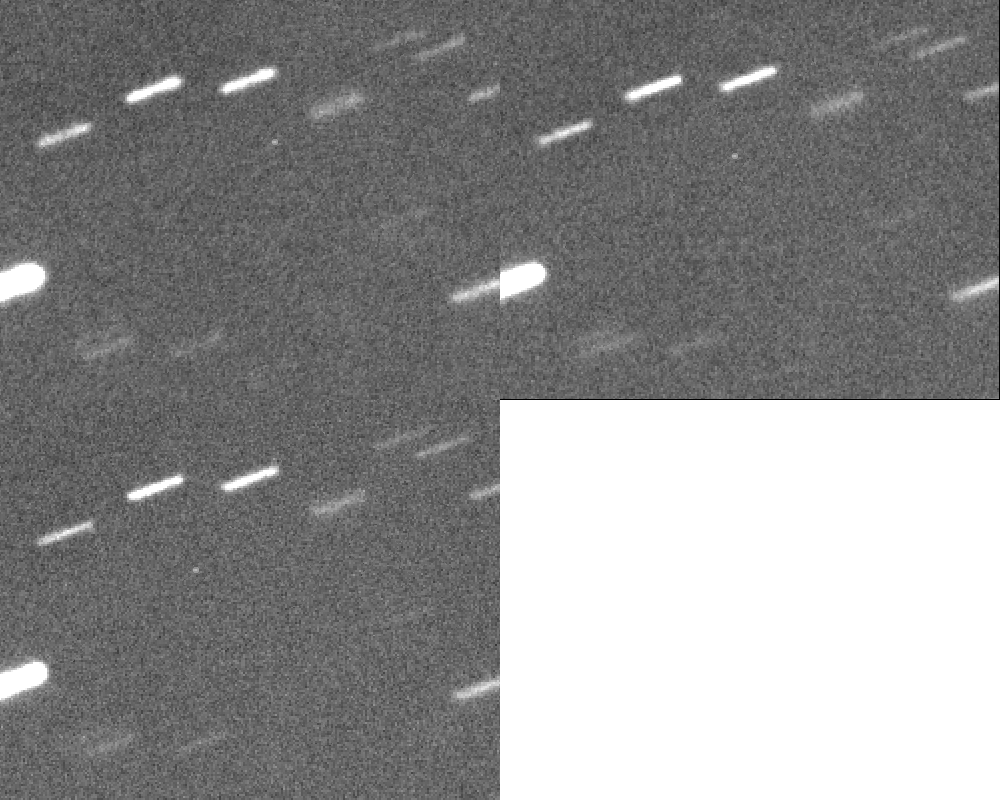
| Animation of CCD images taken on Jan. 28, 2019 at Sormano Observatory to confirm the object after its discovery and reported on NEO Confirmation Page of Minor Planet Center, shows 2019 BZ3 of about 19.4 V in magnitude. This small object, 10 meter in diameter, has a MOID of 0.0005 AU. 2019 BZ3 reached the geocentric minimum distance of about 48133 Km from the Earth on Jan. 27.98, 2019 (see APEC List for more info) . |
|
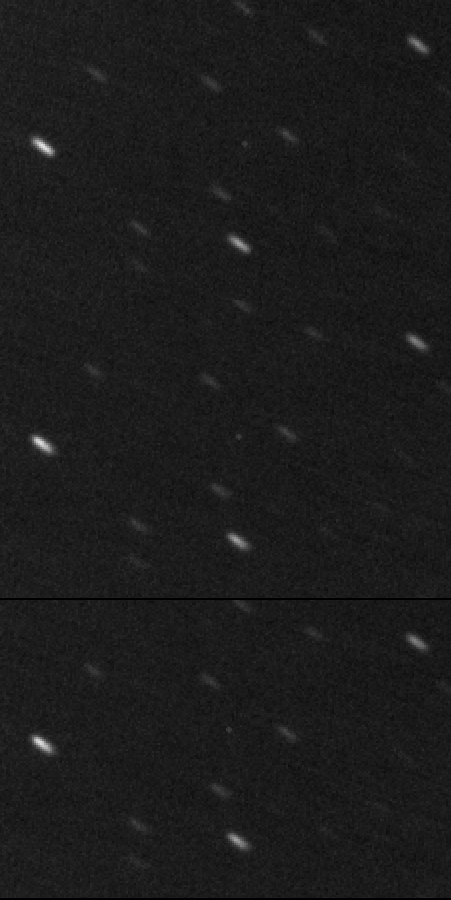
Animation of CCD images taken on January 05, 2020 at Sormano Observatory
during the follow-up confirmation activity when the object of magnitude 17.7 V
was listed in the NEOCP page.
2020 AV2 has been discovered from Palomar Mountain--ZTF IAU code I41 and in reference to its orbital elements seems to be a member of ATIRA family but also the first object with an orbit between Mercury and Venus (see MPEC 2020-A99 : 2020 AV2) |
|
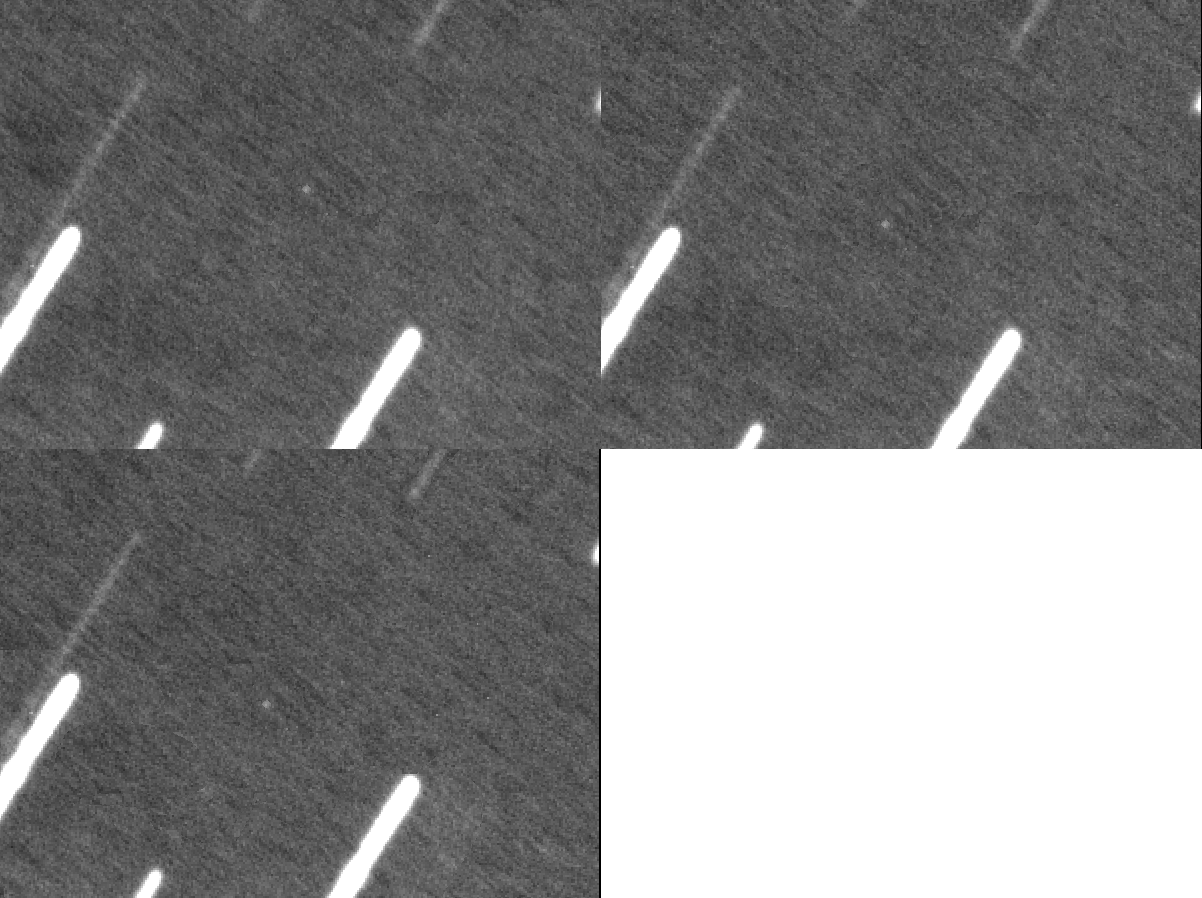
Animation of CCD images taken on February 05, 2020 at Sormano Observatory during the follow-up confirmation session of 2020 CQ1 when the NEA at 18.8 V in magnitude reached the minimum geocentric distance of 64514 km from the Earth (see APEC list at Sormano Astronomical Observatory) |
|
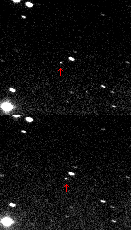
2023 CX1 a small asteroid about 1-2 meter in diameter was discovered at GINOP-KHK, Piszkesteto code K88 by K. Sarneczky. After the discovery the orbit calculated, thanks to more observations taken from Europe and from our observatory Sormano code 587, indicated an impact with the Earth's atmosphere on February 13 03:00 UTC near the coast of Normandy, France.
Animation of CCD images when the object was about 19 V in magnitude and moving at 13 arcsec/min
(see ESA web page) |
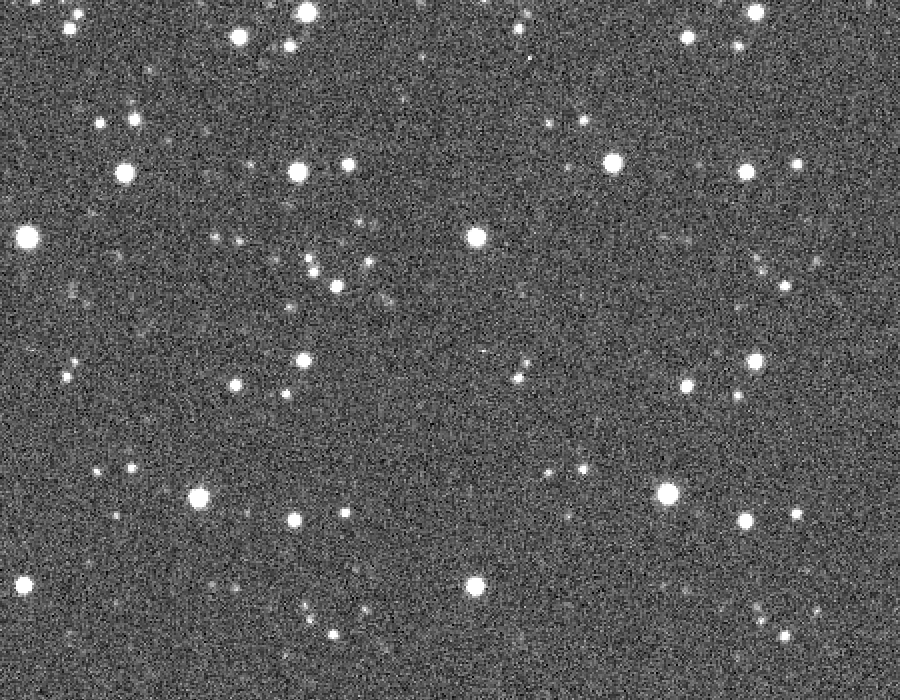
| This Aten asteroid will make a series of close approaches to the Earth in next two centuries (see our MBPL page). The minimum distances will be 0.00658 AU on October 21, 2069 and 0.00575 AU on October 21, 2086. The uncertainties of the next encounters are greatly increased as a result of the 2069 and 2086 close Earth approaches. |
| Animation of CCD images taken at Sormano on December 09, 2017. This Apollo asteroid was the first asteroid to be discovered using images from a spacecraft (images measured by Simon F. Green and John K. Davies). This Potentially Hazardous Asteroid (PHA) has been associated with the Geminid meteor stream as parent body after that Fred Whipple linked that the orbital elements were virtual coincident with the mean orbital elements of 19 Geminid meteors photographed with the super-Schmidt meteor cameras (see IAUC 3879 and IAUC 3881). |
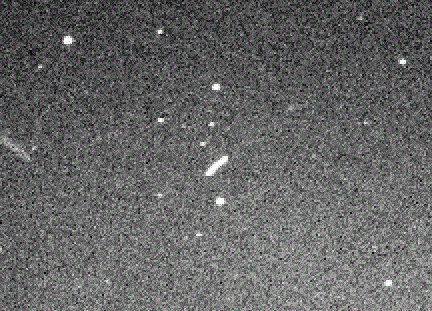
| This 1.3-km minor planet is a Numbered Near Earth Asteroid with a very small Earth-MOID value of 0.00055 AU. In about 30 years (1995-2025), owing to planetary perturbations, this parameter appears changing in a range from 4 to 14 Earth radii. Anyway a small MOID value does not necessarily involve a real past or future close approach. Investigations over about 600 years (1700-2300) show a minimum separation of 1.1 million kilometers (about 3 Earth-Moon distances). occurred on Jan. 16, 1933. This 120 seconds CCD image was taken at Sormano on Jan. 16, 1997. The minor planet appears trailed due to its very fast apparent motion. |
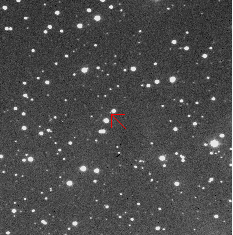
| CCD image of asteroid 1997 XF11, obtained on December 8, 1997 (the day following the discovery) at Sormano Observatory. This object (having a diameter of approximately 1.6 km) has a MOID (minimum orbital distance along the line of the nodes) of 0.0010 AU (computed using orbital elements taking into account also 1990 precovery observations by E. Helin) and therefore can approach the Earth; on October 26, 2028, it is expected to pass as close as 950000 km (approximately 2.5 times the average distance of the Moon) from our planet. |
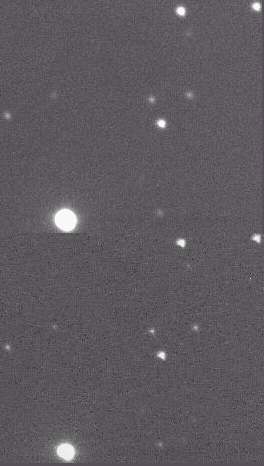
| CCD image of the "long lost" asteroid 1937 UB (Hermes), obtained on October 15, 2003 at Sormano Observatory. This object was discovered by Karl Reinmuth at Heildeberg, Germany in 1937 and tracked for only 4 days when it approached the Earth at 0.0049 AU. After 66 years it was re-found by LONEOS on October 15, 2003 and Timothy B. Spahr staff member of the Minor Planet Center, located other observations made on Oct.5, 2003 and recognized the object as 1937 UB (Hermes). This minor planet has a MOID = 0.0037 AU and about 1 or 2 kilometers in diameter. Subsequently, S. R. Chesley and P. W. Chodas of NASA's NEO Program Office at the JPL, using the Sentry Impact Monitoring Software, were able to link the 1937 and 2003 observations, not easy to compute due to frequent and close planetary encounters. |
|
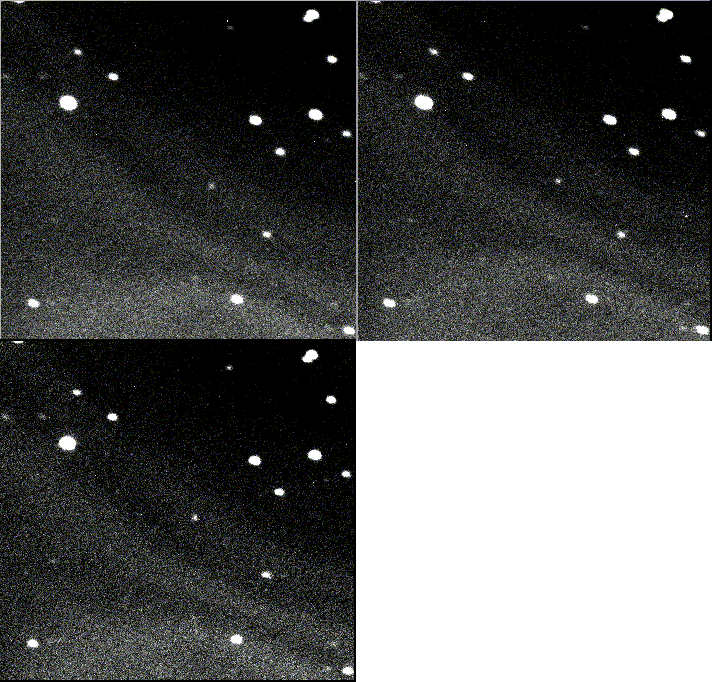
(99942) Apophis ( Apep - the Egyptian god of evil and destruction ) was discovered on June 19, 2004 from Kitt Peak (code 695)
but observed over two nights and rediscovered by the Siding Spring Survey (code E12).
This object with a multiopposition orbit has a MOID of 0.0002 AU.
In reference to the nominal orbit solution, calculated using also Arecibo radar astrometry obtained in January and August 2005, it will pass very close to the Earth at 0.000245 AU or about 36651 Km (geocentric distance) on April 13, 2029 (see our TECA and MBPL lists ). (99942) Apophis has an estimated diameter of about 400 meter. |
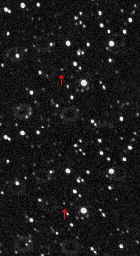
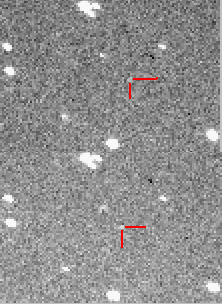
| Asteroid (137108)1999 AN10 was discovered on January 13, 1999 by LINEAR and has become very popular since Andrea Milani and his coworkers have discovered that it is located within a mean motion resonance with the Earth and will undergo a series of close approaches with it, some of them yielding also a non-zero (though very small) impact probability (for details see the original paper by Milani, Chesley and Valsecchi and more recent updates). Precovery astrometric observations of the object on the plates of the Palomar Sky Survey dating back to 1955, identified and measured by A. Gnadig and A. Doppler (see MPEC 1999-N21) have allowed the computation of an improved orbit, excluding any possible impact with the Earth at least for the next 200 years (see our Minor Body Priority List). The images shown on the left were taken at Sormano Observatory on February 7, 1999, when the object was about 18 magnitude. |
| (153814) 2001 WN5 was discovered on November 20, 2001 at LONEOS. This object has a multioppositions orbit and a MOID of 0.0018 AU. It will reach the minimum geocentric distance from Earth of 0.00166 A.U. on June 26, 2028 ( see MBPL list ) such as 250000 Km +/- 5000 Km ( TECA list ). |
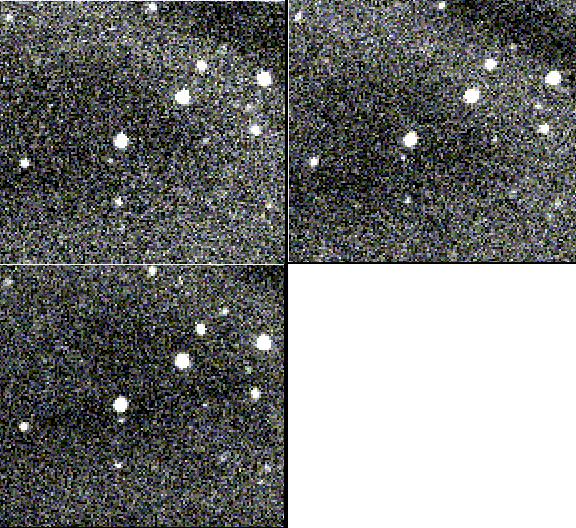
| CCD image obtained at Sormano on April 09, 2010 a few degree above the horizon; at this date the numbered asteroid (153814) was listed in the JPL Sentry System table. |
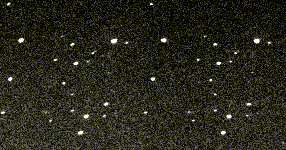
| A numerical integration of the orbit of asteroid (162004) 1991 VE has shown that it has repeated close approaches to Mercury, and therefore has stirred our interest about this object. During the favourable opposition (January 1999) the asteroid was included in the observing schedules of several observatories (including our own); a new computation, based on the improved orbit, confirms that 1991 VE has at least 11 encounters to Mercury (within 0.021 AU) during the next 200 years (see our list of planetary close encounters). Next approach (0.0106 AU) will happen on November 05, 2074, but a closer one seems to have occurred at the beginning of the past century (0.004 AU, on April 7, 1909). |
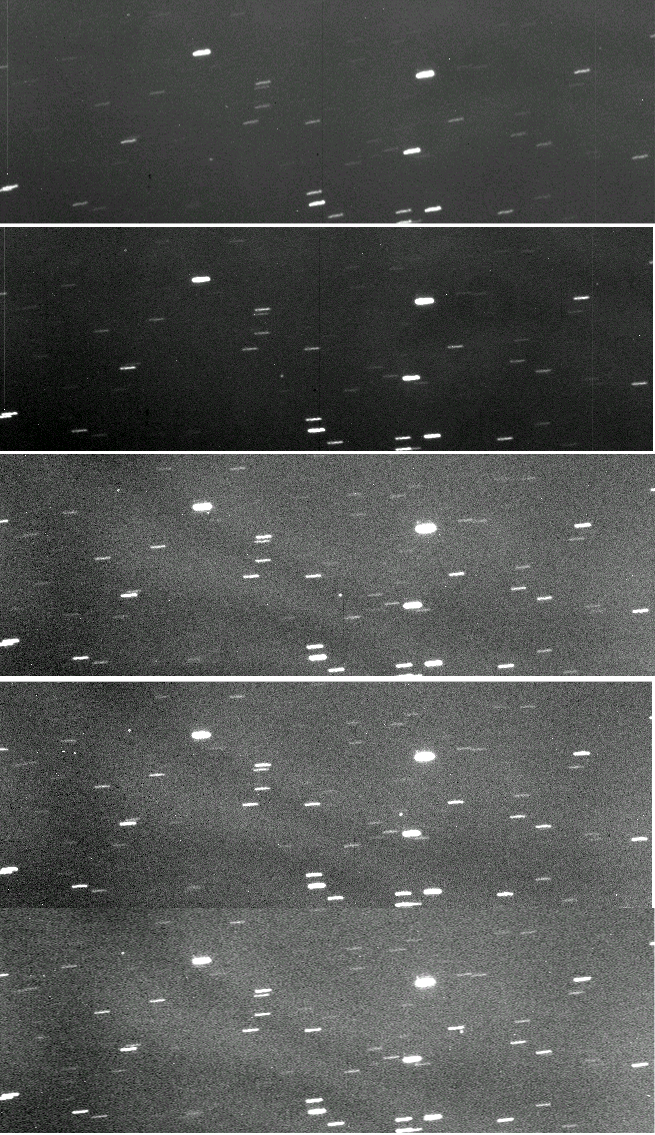
| CCD images of the asteroid 2005 YU55 now numbered as (308635), obtained on April 19, 2010 at Sormano Observatory when the asteroid was travelling at the maximum speed of 70 arcsec/min. At this date the object, having a MOID value of 0.0010 AU, was a radar target (an image obtained with the radar is available). It has reachead the minimum geocentric distance of about 324926 Km from the Earth on November 08, 2011; more close approaches has been computed in the next future but not so close to our planet(see our MBPL list ) and TECA lists). |
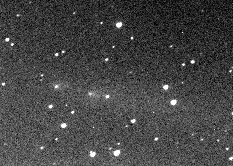
| In spring 1997 comet C/1996 J1 (Evans-Drinkwater) broken in two discrete components. This image, obtained on 1997 June 22, show the "double" comet a few months after the splitting. At that time component A (leftmost) and B had total magnitude 14.7 and 14.2 respectively. |
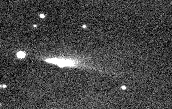
| Comet 1993e (Shoemaker-Levy 9) was first observed at Sormano in the night March 26/27, 1993. The bar-like aspect revealed to be composed by several nuclei (approximately twenty, having a size of the order of one kilometer) produced by the fragmentation of a greater celestial body a few months earlier. |
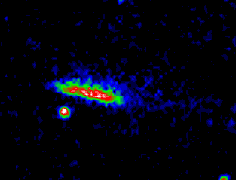
| Some principal condensations are visible in an enlarged CCD view taken with a focal lenght of 3 m, few minutes after the previous image. In July 1994 comet 1993e crashed on Jupiter atmosphere giving birth at one of the most celebrated events in the story of the observational astronomy. |
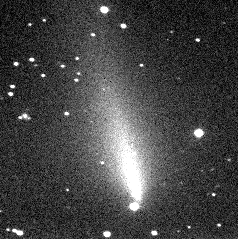
| Approaching its perihelion, comet C/1996 Q1 disgregated under the action of solar heat and gravity. At the time of this image, taken on Nov. 2, 1996, any attempt to obtain consistent astrometric positions was unsuccesful. Was comet nucleus still existent? |
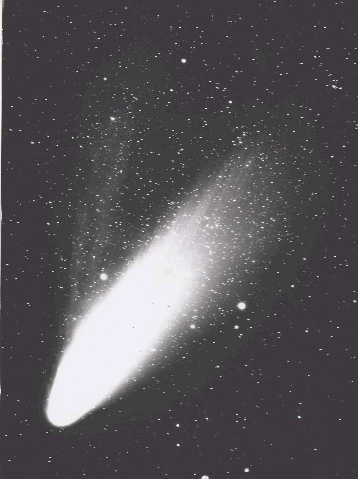
| Cometary dust tails may shown internal structures. This was the case of the Great Comet of 1997 where the rare phenomenon called "striae" appeared during March, with its acme around days 16-20. This photograph was obtained at Sormano on March 20 using the 20 cm, f/5 astrograph. Exposure 20 min on TP4415 film. |
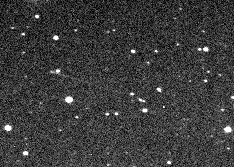
| The difference between asteroids and comets may be not always so clear. Minor planet 1979 OW7 at its second opposition displayed a filiform dust tail never seen before. This object is now redesignated as comet P/1996 N2 (Elst-Pizarro). The reasons for this unexpected unique feature remain obscure. This CCD image was obtained at Sormano on 1996 Aug. 22. |
|
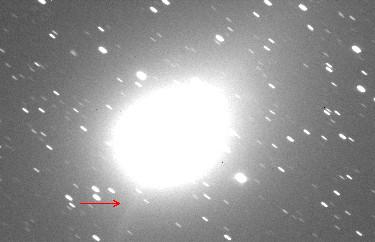
This unfiltered CCD image, obtained at Sormano on 2001 Nov. 19.962 UT, shows
the elusive appearance of the anti-tail (pointed by the red arrow)
of C/2000 WM1. The anti-tail of a comet is formed by the dusty component of the tail and may occur as a prospectical effect when the Earth crosses the comet orbital plane (for this comet it was predicted only five hours later). The dusty component of the tail, spread on the comet orbital plane as a fan behind the comet nucleus, when seen under particular geometrical conditions may appear on both sides respect to the comet central condensation. |
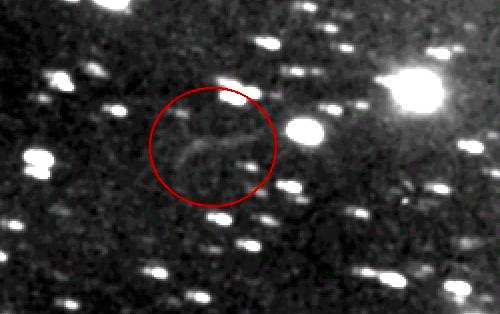
| This CCD image taken at Sormano Observatory on January 23, 2010, shows periodic comet P/2010 A2. The orbital elements of this comet discovered by LINEAR, are similar to a Main Belt Asteroid of the Flora family. Images taken by the Hubble Space telescope at the end of January 2010 has suggested that the cometary appearance could be the product of a collision between asteroids. |
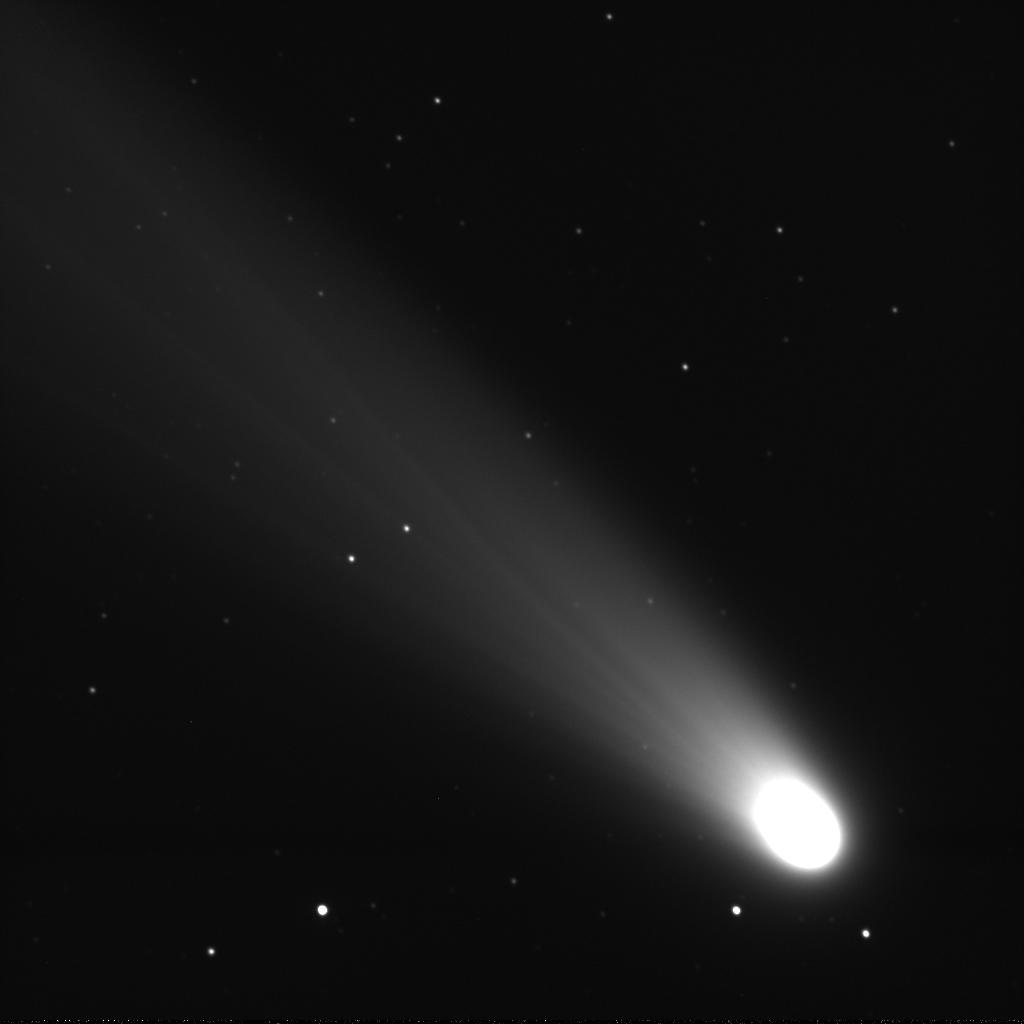
| An image of comet 153P/2002 C1 (Ikeya-Zhang) taken with the new 1024x1024 CCD of Sormano Observatory (March 20, 2002, 19:52 UT) with an exposure of 10 s. The object has been identified with comet C/1661 C1. |
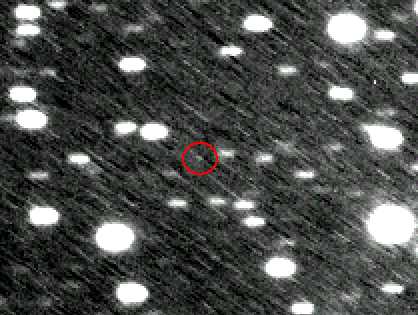
| WISE satellite (Wide-Field Infrared Survey Explorer), a NASA-funded Explorer mission has been placed in a so-called Sun-synchronous orbit. WISE carrying an infrared-sensitive telescope, has discovered new Near-Earth-Asteroids and Comets in the infrared spectrum, so these objects are brights for WISE but faint if observed through optical telescopes. This CCD image taken at Sormano Observatory on March 15, 2010 shows a new Comet discovered by WISE (see MPEC 2010-F01) and named with the provvisional designation C/2010 E3. |
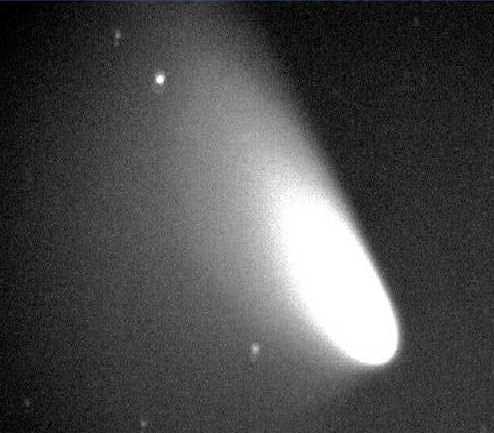
| Image of the Comet C/2011 L4 (PANSTARRS) taken at Sormano on March 21, 2013 when its magnitude was about +6.3. This is a non-periodic comet discovered on June 6, 2011 at the Observatory Pan-STARSS 1, Haleakala IAU code F51. The C/2011 L4 (PANSTARRS) reached the perihelion in March 2013 and some studies concluded that the comet is young. |
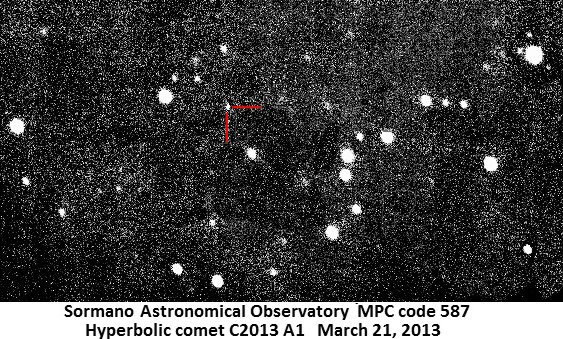
Image taken at Sormano Observatory on March 21, 2013 of the hyperbolic comet C/2013 A1 at low elevation respect our location. This object was discovered by Robert H. McNaught at the Siding Spring Observatory (MPC code E12) on January 3, 2013. Starting from the first orbit computed at Minor Planet Center, has been taken into account that the comet will pass very close to Mars on October 19, 2014 (see our dedicated web page), this very close encounter has been confirmed using all observations and astrometric measures obtained after the discovery. Subsequent calculations performed by Leonid Elenin (Russian astronomer at the Keldysh Institute of Applied Mathematics) and after at JPL NEO office , have suggested a small possibility that this comet could impact the red planet due to the uncertainty of the orbital elements calculated for this hyperbolic comet.
|
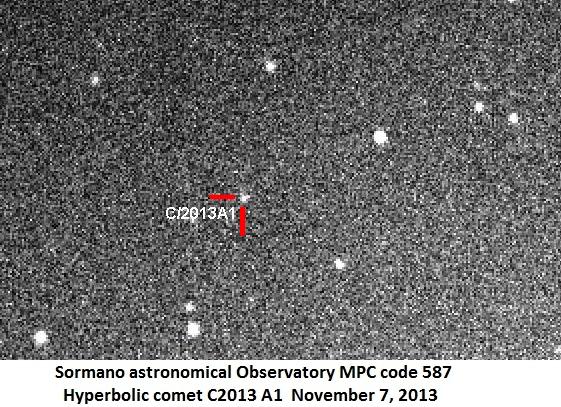
Image taken at Sormano Observatory on November 07, 2013 of the Hyperbolic comet C/2013 A1 (SIDING SPRING)
|
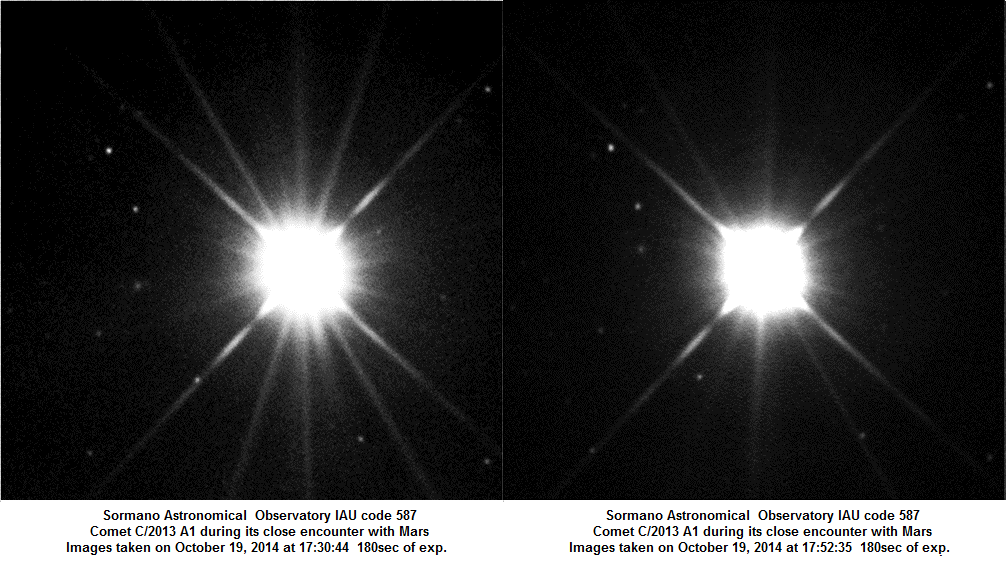
Animation of the comet C/2013 A1 close to Mars on October 19, 2014. The comet was very low on the horizon in reference to our Observatory. This event has been observed using instruments on-board NASA and ESA satellite in orbit around Mars and rovers on the Red Planet surface. Astrometric measures of the comet were sent to Minor Planet Center in order to improve its orbit.
|
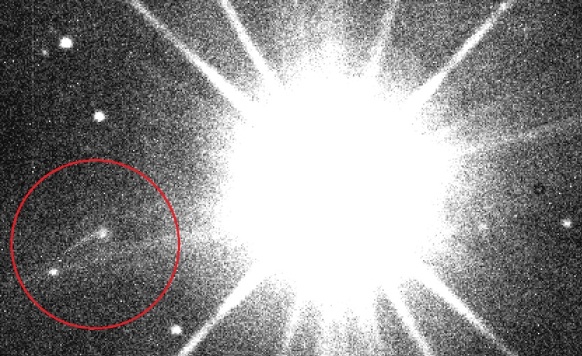
Image taken on October 19, 2014 at 17:21:02 UT, shows a tail. |
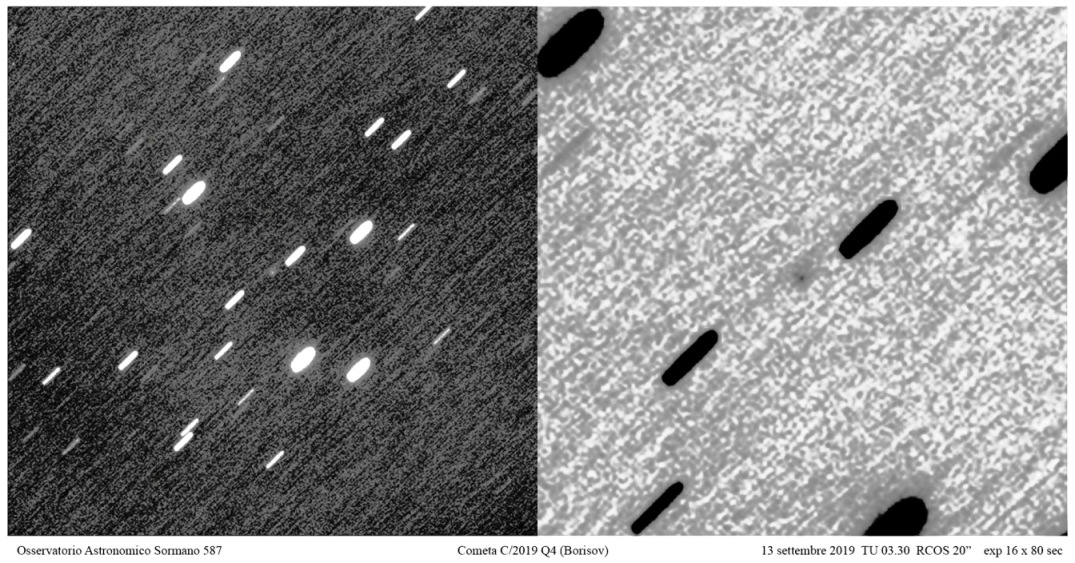
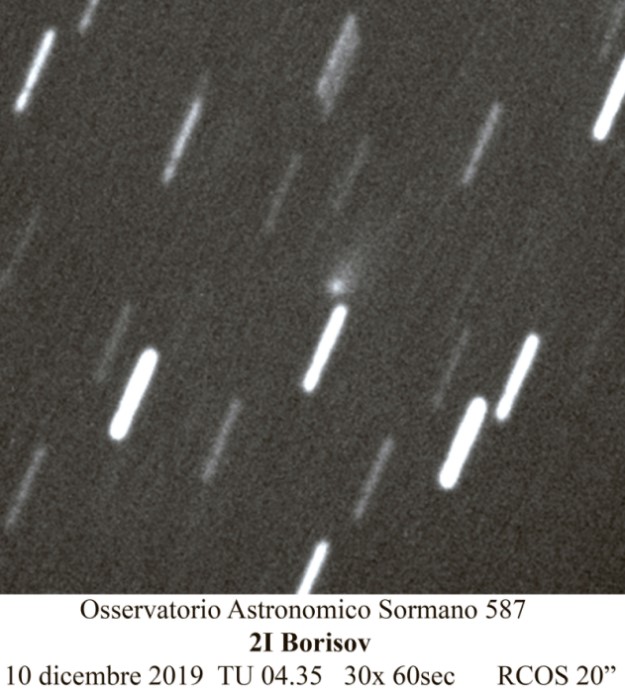
Image of comet 2I/Borisov with preliminar designation C/2019 Q4 (Borisov) taken at Sormano Astronomical Observatory
on September 13, 2019. This comet was discovered by the amateur observer
|
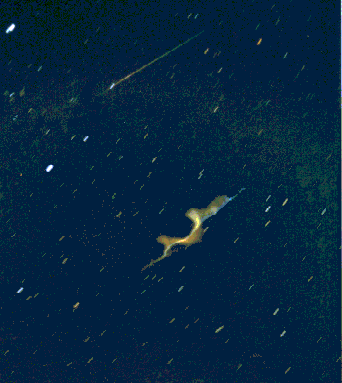
| The effect of a Leonid fireball is clearly seen in this 2 min exposure photograph obtained by Sormano's team on Nov. 17, 1998 at 3:15 UT. The camera was equipped with a 50 mm lens, working at f/1.9 and a Fujiicolor 800 SuperPlus film. |
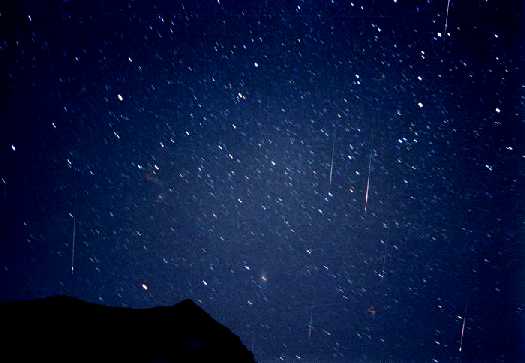
| The same morning at 3:30 UT some Leonids meteor trails were recorded in a new 2 min exposure time. |
|
After two years from its launch and one high velocity flyby near the C type
asteroid (253) Mathilde on June 27, 1997
the NEAR spacecraft, in January 1998,
returned to its home planet briefly for a gravity assist enable to put it
on a new path toward the minor planet (433) Eros.
Only 12 hours before the minimum distance (about 3600 km above the Earth surface) the spacecraft was imaged at Sormano when still at 317000 km from our planet (a little less than the distance of the Moon!). This 240 second CCD frame, obtained on January 22, 1998 at 19:15:40 UTC (mid exp.) shows the 16 magnitude NEAR probe in rapid motion (16.4 arcsec/min) among faint stars in the costellation of the Taurus. |
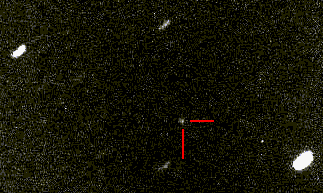
| CCD image taken at Sormano Observatory on May 18, 2003 of the S-IVB third stage from the Saturn V rocket used to launch the Apollo 12 lunar landing mission in November 1969. In June 2003, J002E3 has departed from the Earth-Moon system. |
The ESA's spacecraft Rosetta has its main scientific objective in the periodic Comet 67P Churyumov-Gerasimenko (for more details see the web page Spacecrafts to Asteroids and Comets). In order to reach its goal, the mission has been designed to perform a few fly-bies with the Earth.
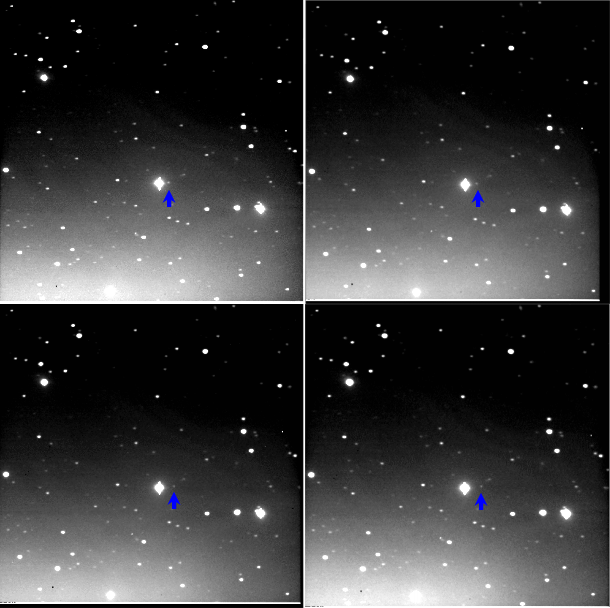
| Still at great distance from our planet, Rosetta was imaged on March 1, 2005 on four frames of 180 sec of exposure and combined in the animation at left (the estimate apparent magnitude was about 17). |
.jpg)
| On March 4, 2005 the European probe crossed the evening sky of Europe from South-East to West progressively increasing its speed. This trailed image of 30 sec of exposure has been taken on UTC 20:38:33 (start time) using the Sormano's 50 cm telescope plus 1Kx1K CCD camera and shows Rosetta near the 5.6 magnitude star 18 Leonis. |
.jpg)
| More than one hour later, on UTC 21:52:58 (start time), the spacecraft's motion has been computed in 247"/sec. Its trail was still visible in this 4 sec exposure image taken at 14* degree in altitude and three minutes before that Rosetta could disappear below the local western horizon (picture with the same scale that the previous one). |
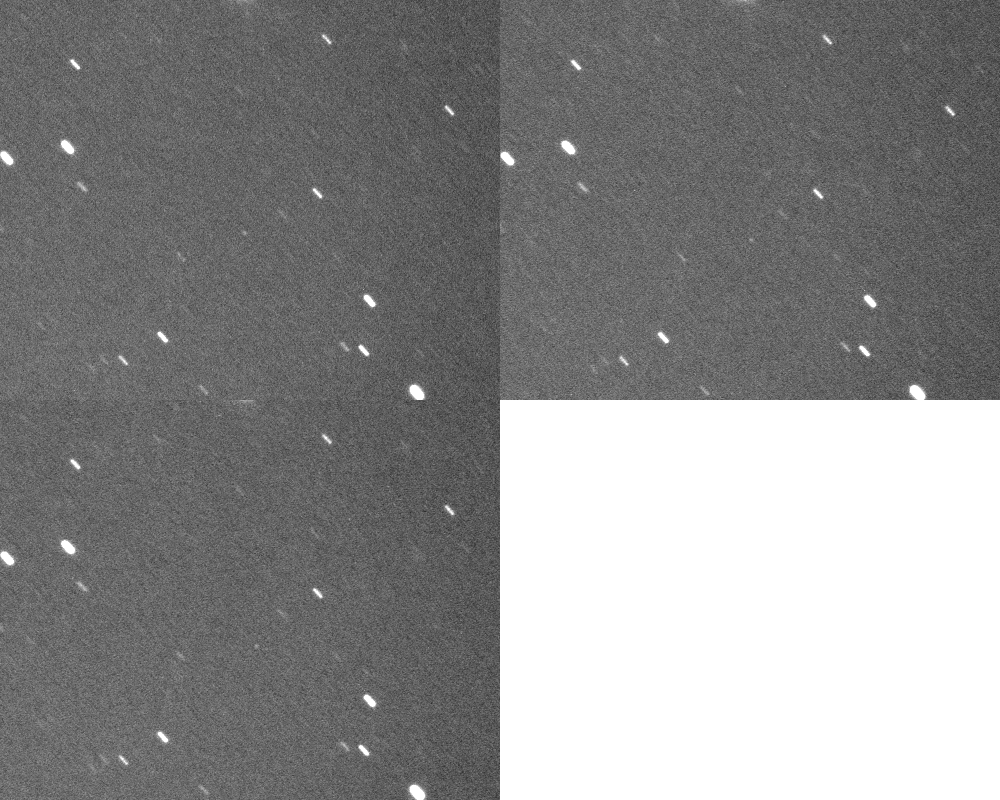
| OSIRIS-REX on September 20, 2017 21.20 UT at a distance of about 1036000 km from the Earth |
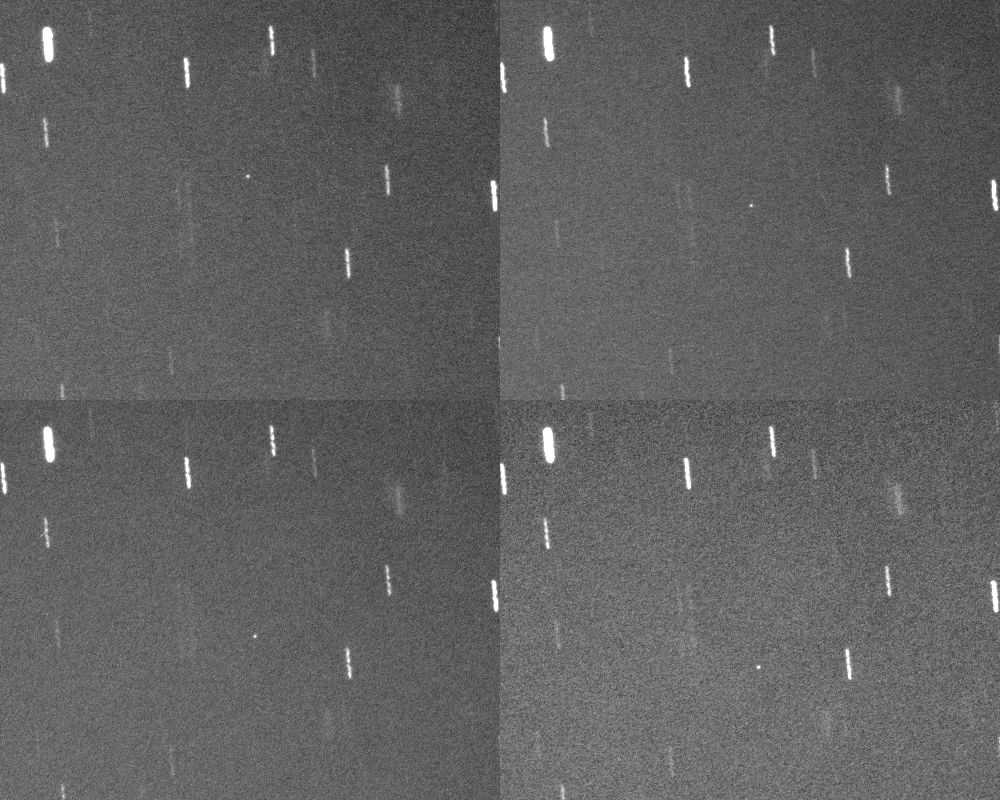
| OSIRIS-REX on September 21, 2017 19:45 UT at a distance of about 420000 km from the Earth |
| CCD images taken at Sormano Observatory shows the spacecraft OSIRIS-REX the days before the Earth Gravity assist planned for the September 22 in order to increase its speed to complete the journey to the asteroid (101955) Bennu for the NASA's asteroid sample return mission in 2018. |
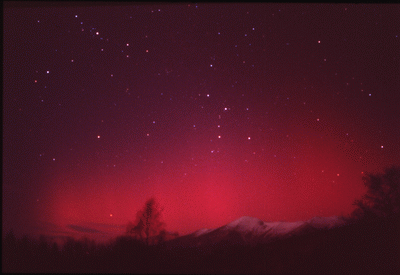
| Image taken on March 31, 2001 from the Sormano Observatory at 21 UT. The event has been observed for about 1 hour. |
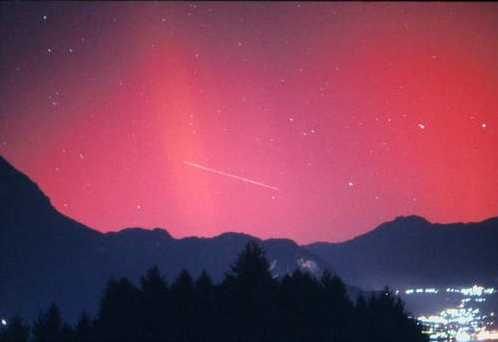
| Image taken on October 21, 2001 between the Sormano Observatory and Bellagio (lights in the background) near the lake of Como. The trail has been due to an airplane. |
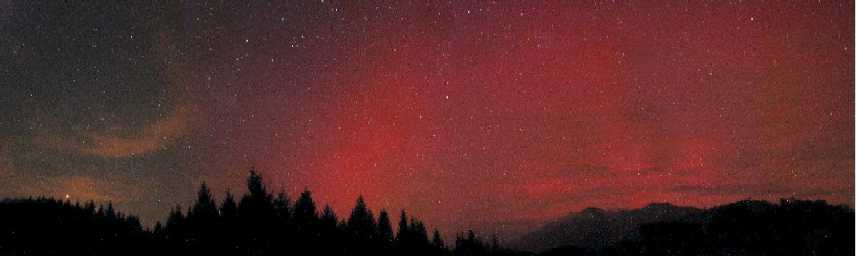
Mosaic of images taken on November 20, 2003 at 22 UT from the Sormano Astronomical Observatory. The event has been observed on alternate phases for about three hours (FOV of about 180* from West to North-East, in reference to the Sormano Observatory). |

Image taken on October 10, 2024 at 21 UT near the area Sormano Astronomical Observatory. The event has been observed in North Italy and other locations in Europe. |
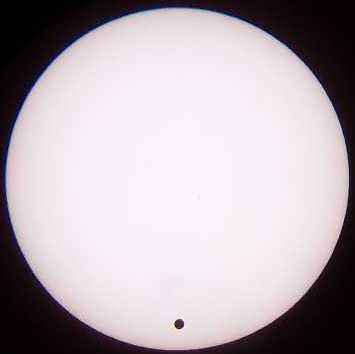
| See the Venus's page with images taken on June 08, 2004 from the Sormano Observatory during the final sequence of the transit |
 Back to Sormano Astronomical Observatory Home Page
Web Curators: M. Carpino, F. Manca
Last modified: October 11, 2024